
Table of Contents
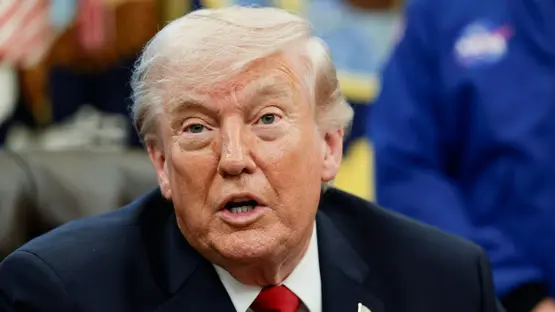
Trump says ceasefire still holds despite renewed fighting between American and Iranian forces in the Gulf, a development that has once again raised fears of wider conflict in the Middle East.
The latest clashes happened near the Strait of Hormuz, one of the world’s most important oil shipping routes. According to U.S. President Donald Trump, three American Navy destroyers came under attack while moving through the strategic waterway.
Although Trump confirmed that the ships were targeted, he stated that no damage was recorded on the American side. Iran, however, claimed that its military response inflicted significant damage after accusing the United States of violating the ceasefire agreement.
The renewed violence comes at a critical moment as Tehran reviews a U.S.-backed proposal designed to formally end the ongoing war that started earlier this year.
Read: OFFICIAL: Israel Backs Trump Two-Week Iran Pause, Lebanon Excluded
Trump Says Ceasefire Still Holds Amid Rising Gulf Tensions
Despite the exchange of fire, Trump insisted the ceasefire agreement remains active.
Speaking to reporters in Washington, the U.S. president attempted to downplay the seriousness of the confrontation.
“They trifled with us today. We blew them away,” Trump said after the military incident.
Earlier, Trump had posted on Truth Social that the American destroyers successfully passed through the Strait of Hormuz under fire.
According to his statement:
- Three U.S. Navy destroyers were targeted
- No American vessels suffered damage
- Iranian attackers reportedly faced heavy retaliation
- The ceasefire agreement technically remains in effect
The remarks reflected Washington’s effort to avoid signaling a complete collapse of diplomatic talks.
Why the Strait of Hormuz Matters
The Strait of Hormuz remains one of the world’s most sensitive maritime routes.
Nearly one-fifth of global oil and liquefied natural gas shipments pass through the narrow waterway every day. Any military escalation in the area immediately affects international energy markets.
Since the conflict between the United States and Iran intensified earlier this year, Iran has significantly restricted maritime movement in the strait.
That disruption has already caused:
- Rising oil prices
- Higher fuel costs globally
- Increased shipping insurance rates
- Concerns about energy supply shortages
- Market uncertainty across financial sectors
Following the latest clashes, Brent crude oil prices reportedly surged above $100 per barrel during early Asian trading hours.
Iran Accuses US of Violating Ceasefire
Iran’s military leadership accused the United States of breaking the ceasefire agreement first.
According to Iran’s top joint military command, American forces allegedly targeted:
- An Iranian oil tanker
- Another unidentified ship
- Civilian areas on Qeshm Island
- Coastal zones near the Strait of Hormuz
Iranian military officials stated that they responded by launching attacks against U.S. military vessels near the port of Chabahar and east of the strait.
A spokesperson for Iran’s Khatam al-Anbiya Central Headquarters claimed the operation caused “significant damage” to American assets.
However, U.S. Central Command denied those claims and insisted none of its military equipment or vessels were hit.
The conflicting statements highlight the ongoing information war between Washington and Tehran.
UAE Comes Under Renewed Attack
The United Arab Emirates also reportedly faced renewed drone and missile threats during the escalation.
UAE air defense systems were activated to intercept incoming Iranian projectiles.
Although details remain limited, the incident has renewed fears that Gulf nations hosting U.S. military bases could continue becoming targets in the wider conflict.
Since the war began earlier this year, Iran has repeatedly launched attacks toward Gulf states allied with Washington.
Countries most exposed include:
- United Arab Emirates
- Saudi Arabia
- Bahrain
- Qatar
- Kuwait
Oil Prices Rise as Markets React
Global financial markets reacted quickly after reports of the latest fighting emerged.
Oil prices climbed sharply while stock markets retreated after several days of gains tied to hopes for peace negotiations.
Analysts say investors remain worried about the possibility of prolonged disruptions in Middle Eastern oil exports.
According to energy market estimates:
- More than 2.3 million barrels per day of refining capacity have already been affected
- Around 20 refineries across the Middle East have either been damaged or temporarily shut down
- Drone attacks continue threatening energy infrastructure
Energy analysts believe oil prices could rise even further if the Strait of Hormuz faces additional disruptions.
Trump Pushes Diplomatic Solution Despite Fighting
Even as military tensions rise, Trump continues pushing for negotiations with Tehran.
The U.S. administration recently presented Iran with a proposal aimed at formally ending the conflict.
Reports suggest the proposal includes:
- Long-term ceasefire guarantees
- Regional security arrangements
- Maritime protections in the Gulf
- Restrictions related to Iran’s nuclear activities
However, Iran has not officially accepted the proposal.
Trump nevertheless expressed confidence that Tehran may eventually agree.
“We’re negotiating with the Iranians,” Trump told reporters.
He also repeated his administration’s demand that Iran must never acquire nuclear weapons.
Iran’s Nuclear Program Remains a Key Issue
One of the biggest obstacles in negotiations remains Iran’s nuclear program.
The United States insists that any final agreement must include guarantees preventing Tehran from developing nuclear weapons.
Trump claimed Iranian officials had acknowledged that condition during discussions.
“There’s zero chance. And they know that,” Trump said.
Iran has consistently argued that its nuclear activities are for peaceful purposes. However, Western governments and regional rivals continue expressing concern over uranium enrichment activities and missile development.
The Ceasefire Has Been Fragile From the Beginning
The current ceasefire took effect on April 7 after weeks of intense fighting between U.S.-Israeli forces and Iran.
Although large-scale attacks decreased afterward, smaller incidents continued regularly.
Military analysts note that the ceasefire was always fragile because several core issues remained unresolved, including:
- Iranian military influence in the Gulf
- U.S. military presence in the region
- Shipping security
- Nuclear negotiations
- Sanctions relief
- Regional proxy conflicts
Because of those unresolved tensions, many experts predicted further clashes even while formal diplomacy continued.
Read:OFFICIAL: Israel Backs Trump Two-Week Iran Pause, Lebanon Excluded
Gulf Countries Remain on High Alert
Governments across the Gulf region remain deeply concerned about the possibility of wider conflict.
Several Gulf states host American military facilities, making them vulnerable to Iranian retaliation.
Security measures across the region have reportedly increased significantly, including:
- Expanded missile defense operations
- Naval patrols
- Airspace monitoring
- Emergency preparedness drills
- Increased protection for oil facilities
The UAE’s latest reported interception of drones and missiles demonstrates how quickly regional tensions can spread beyond direct U.S.-Iran confrontations.
Impact on Global Fuel Prices
American consumers are already feeling the economic impact of the conflict.
According to recent fuel data:
- U.S. gasoline prices have risen by over 40% since February
- Average fuel prices increased by roughly $1.20 per gallon
- Some areas now report gasoline prices above $4 per gallon
The higher costs are largely linked to disruptions in oil transportation through the Strait of Hormuz.
Global shipping companies have also faced increased operating costs because of security concerns in the Gulf.
Economists warn that prolonged instability could worsen inflation pressures in multiple countries.
Trump Faces Political Pressure at Home
The war has also tested Trump politically inside the United States.
During his campaign, Trump promised to:
- Avoid prolonged foreign wars
- Reduce fuel prices
- Focus on domestic economic growth
- Limit overseas military involvement
Now, rising gasoline prices and military tensions have created new challenges for his administration.
Some of Trump’s supporters have questioned continued U.S. military operations in the Middle East.
Others argue that strong military responses remain necessary to deter Iranian aggression.
The political debate surrounding the conflict is expected to intensify if fighting continues.
Tehran Signals Openness to Talks
Despite military clashes, Iranian officials have not completely rejected diplomacy.
Iranian media later reported that conditions near the Strait of Hormuz had “returned to normal” after several hours of exchanges.
That statement may indicate that Tehran also wants to prevent a full-scale escalation.
Analysts believe both sides are attempting to:
- Show military strength publicly
- Maintain leverage in negotiations
- Avoid a wider regional war
- Protect strategic interests
Middle East Refineries Under Pressure
Energy infrastructure across the Middle East continues facing significant risks.
Since the conflict started:
- Drone attacks have targeted refinery facilities
- Oil production has slowed in several locations
- Export operations have faced repeated disruptions
- Shipping companies have adjusted Gulf routes
The reduction in refining capacity has already affected global supply chains.
Energy markets remain extremely sensitive to developments in the Gulf because the region supplies a major portion of the world’s oil exports.
International Community Calls for Restraint
Several world governments are expected to intensify diplomatic efforts following the latest clashes.
International concerns include:
- Rising oil prices
- Maritime security risks
- Regional military escalation
- Threats to civilian infrastructure
- Economic instability
The United Nations and European powers continue urging both Washington and Tehran to return fully to negotiations.
Military Experts Warn of Escalation Risks
Defense analysts warn that even limited exchanges could spiral into a broader confrontation.
Several factors increase the danger:
Miscalculation at Sea
Naval confrontations in narrow waterways can escalate quickly.
Proxy Involvement
Iran-backed groups across the Middle East could become more active.
Economic Pressure
Higher oil prices may increase international tensions.
Political Expectations
Leaders on both sides face pressure to appear strong domestically.
Experts say avoiding accidental escalation will require constant diplomatic communication.
Can Diplomacy Still Prevent a Larger War?
The central question now is whether negotiations can survive repeated military incidents.
Possible outcomes include:
Temporary Stability
Both sides continue limited exchanges while diplomacy progresses.
Expanded Regional Conflict
Attacks spread further across Gulf states and shipping routes.
Formal Peace Agreement
Iran and the United States eventually finalize a broader settlement.
At present, neither side appears ready for a full-scale war, but tensions remain dangerously high.
What Happens Next?
Several developments will likely shape the next phase of the crisis:
- Iran’s official response to the U.S. proposal
- Future military incidents in the Gulf
- Oil market stability
- Gulf state security measures
- International diplomatic intervention
FAQ Section
Why did fighting break out between the US and Iran again?
Iran accused the United States of violating the ceasefire by targeting ships and coastal areas, while the U.S. said its destroyers came under Iranian attack in the Strait of Hormuz.
Did the ceasefire officially end?
No. President Donald Trump stated that the ceasefire agreement is still in effect despite the latest clashes.
Why is the Strait of Hormuz important?
The Strait of Hormuz is a critical global shipping route through which nearly 20% of the world’s oil and liquefied natural gas passes.
How have oil prices reacted?
Oil prices increased sharply after the clashes, with Brent crude rising above $100 per barrel due to fears of supply disruptions.
Are the US and Iran still negotiating?
Yes. Both countries continue discussing a proposal aimed at formally ending the conflict, although no final agreement has been reached yet.

