
Table of Contents
The South Africa World Cup Visa Debacle has become one of the biggest talking points ahead of the FIFA World Cup 2026, after Bafana Bafana failed to depart for Mexico as scheduled due to unresolved visa issues affecting players and team officials.
With only days remaining before South Africa’s opening match against co-hosts Mexico, the unexpected travel delay has sparked criticism from government officials, concern among supporters, and questions about the South African Football Association’s administrative readiness.
The incident comes at a crucial stage of South Africa’s World Cup preparations, threatening to disrupt the team’s plans for acclimatization, training, and tactical adjustments before entering football’s biggest tournament.
Read: OFFICIAL: Offset Shot in Florida – Rapper Hospitalised After Casino Incident
Why South Africa’s World Cup Departure Was Delayed
Visa Issues Force Last-Minute Travel Changes
The South Africa World Cup Visa Debacle unfolded when several players and officials reportedly failed to receive the necessary travel documentation required for entry into Mexico.
Bafana Bafana had been scheduled to leave South Africa on a charter flight for Pachuca, their designated training base during the tournament. However, the flight was postponed after authorities discovered that not all travel requirements had been completed.
As a result, the national team remained in Johannesburg while football administrators worked urgently to resolve the situation.
The delay immediately triggered widespread criticism from fans and football stakeholders who expected all logistical arrangements to have been finalized months before the tournament.
Emergency Response From SAFA
Following the disruption, the South African Football Association (SAFA) confirmed that visa-related challenges were responsible for the delay.
Officials stated that efforts were underway around the clock to ensure the team could travel as soon as possible.
An emergency meeting was reportedly scheduled to address the crisis and determine accountability for the administrative oversight.
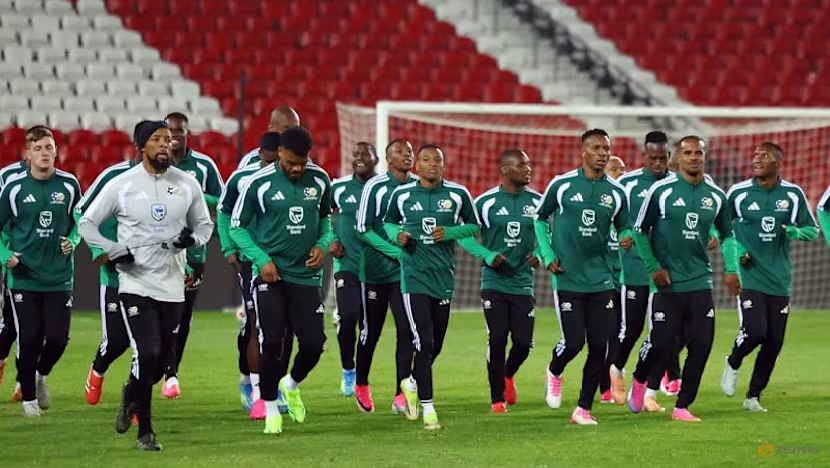
The association also reassured supporters that training sessions would continue in Johannesburg until travel arrangements were finalized.
Sports Minister Reacts Strongly
Government Demands Accountability
South Africa’s Minister of Sports, Gayton McKenzie, expressed frustration over the situation.
His public criticism reflected growing concerns about the image being projected internationally just days before the tournament begins.
According to the minister, the incident was unfair to both players and coaching staff who had spent months preparing for football’s most prestigious competition.
Calls for a detailed report and disciplinary action against those responsible indicate that the fallout from the South Africa World Cup Visa Debacle could extend beyond the tournament itself.
Impact on South Africa’s International Reputation
International sporting events place countries under intense scrutiny.
Administrative failures involving national teams can damage confidence among sponsors, supporters, and football governing bodies.
Many observers believe the visa crisis creates unnecessary distractions at a moment when the focus should be entirely on football performance.
South Africa now faces the challenge of restoring confidence while ensuring the team reaches Mexico without further delays.
How the Delay Could Affect Bafana Bafana’s World Cup Campaign
Reduced Preparation Time
One of the biggest concerns surrounding the South Africa World Cup Visa Debacle is the loss of valuable preparation time.
National teams typically arrive early to:
- Adapt to local weather conditions
- Adjust to time zone differences
- Conduct tactical training sessions
- Participate in recovery programs
- Familiarize themselves with facilities
Every day lost before a major tournament can impact performance levels.
Coaching staff often rely on detailed schedules designed months in advance. Unexpected disruptions force adjustments that may affect player readiness.
Mental Impact on Players
Footballers preparing for a World Cup already face enormous pressure.
Unexpected travel complications add another layer of uncertainty.
Players must now maintain concentration despite constant media attention surrounding the administrative crisis.
Maintaining morale and focus becomes essential if South Africa hopes to compete effectively against top international opponents.
South Africa’s Journey to the 2026 FIFA World Cup
A Historic Return
Despite the current controversy, South Africa’s qualification campaign represented a major achievement.
The 2026 tournament marks Bafana Bafana’s first World Cup appearance since hosting the competition in 2010.
For many supporters, qualification symbolized the revival of South African football on the global stage.
The squad earned its place through a determined campaign that demonstrated resilience and consistency.
Qualification Controversy Almost Derailed Progress
The road to qualification was not entirely smooth.
An administrative mistake involving midfielder Teboho Mokoena nearly proved costly.
South Africa fielded the player despite suspension concerns, leading to the overturning of a crucial victory against Lesotho.
Fortunately for Bafana Bafana, the team still managed to finish ahead of rivals Nigeria and Benin in the qualification standings.
That incident raised concerns about organizational procedures within South African football administration.
The current visa crisis has revived those discussions.
Hugo Broos Faces Unexpected Challenge
Coach Must Keep Players Focused
Head coach Hugo Broos now faces one of the toughest managerial tests of his tenure.
While tactical preparation remains important, managing emotions and maintaining discipline have become equally critical.
The experienced Belgian coach has earned praise for rebuilding the national team and guiding South Africa back to football’s grandest stage.
Now he must ensure external distractions do not undermine months of hard work.
Leadership Becomes Essential
Successful tournament teams often overcome adversity through strong leadership.
South Africa’s senior players will play a crucial role in maintaining calm within the squad.
Experienced figures can help younger teammates stay focused on football rather than administrative complications.
Leadership inside the dressing room could prove just as important as tactical planning during the coming weeks.
South Africa’s World Cup Group Analysis
Opening Match Against Mexico
South Africa begins its FIFA World Cup 2026 campaign against co-host Mexico on June 11.
The match is expected to attract a massive global audience.
Playing against a host nation creates additional challenges because of crowd support and heightened expectations.
A strong performance could provide momentum for the remainder of the tournament.
Remaining Group Fixtures
South Africa’s group schedule includes:
- Mexico – June 11
- Czech Republic – June 18
- South Korea – June 24
Each fixture presents unique tactical challenges.
Mexico combines technical quality with passionate home support.
The Czech Republic brings European organization and physical strength.
South Korea offers speed, discipline, and extensive international tournament experience.
Success will require maximum concentration from the opening whistle.
Lessons From the South Africa World Cup Visa Debacle
Importance of Early Planning
The incident highlights why detailed planning remains essential in international sport.
Modern football tournaments involve extensive logistical requirements including:
- Travel documentation
- Accommodation arrangements
- Security clearances
- Medical documentation
- Equipment transportation
Any oversight can create major disruptions.
Football associations worldwide will likely study this situation as a reminder of the importance of administrative excellence.
Strong Governance Matters
Elite football success depends on more than talented players and skilled coaches.
Efficient governance and operational management are equally important.
The South Africa World Cup Visa Debacle demonstrates how administrative shortcomings can overshadow sporting achievements.
Organizations must establish systems that minimize risks and ensure accountability.
Fan Reactions Across South Africa
Supporters Express Frustration
News of the delay spread rapidly across social media platforms.
Many supporters expressed disappointment that logistical issues emerged at such a critical moment.
Others voiced sympathy for players whose preparations were disrupted through no fault of their own.
The overwhelming sentiment remains one of hope that the situation will be resolved quickly.
Confidence in the Team Remains Strong
Despite frustration with the administrative problems, supporters continue to back the squad.
Fans recognize the progress achieved under Hugo Broos and remain optimistic about South Africa’s chances in the tournament.
National pride remains high as the team prepares to represent the country on football’s biggest stage.
What Happens Next?
Urgent Visa Resolution Required
The immediate priority involves securing all remaining visas and completing travel arrangements.
Once documentation issues are resolved, the team is expected to fly directly to Mexico and resume its planned preparation schedule.
Every effort will be made to minimize further disruption.
Focus Returns to Football
After arrival, attention will shift back to the pitch.
Training sessions, tactical planning, and player fitness management will become the primary priorities.
Read: OFFICIAL: Offset Shot in Florida – Rapper Hospitalised After Casino Incident
Frequently Asked Questions (FAQ)
1. Why was South Africa’s World Cup departure delayed?
South Africa’s departure was delayed because several players and officials had not yet received the required visas to travel to Mexico.
2. What is the South Africa World Cup Visa Debacle?
The South Africa World Cup Visa Debacle refers to the administrative issues that prevented the national team from departing for the FIFA World Cup 2026 as scheduled.
3. When does South Africa play its first World Cup match?
South Africa is scheduled to face Mexico on June 11, 2026, in its opening FIFA World Cup group-stage match.
4. Who criticized the visa situation?
South African Sports Minister Gayton McKenzie publicly criticized the handling of the visa process and called for accountability.
5. Will the delay affect South Africa’s World Cup preparations?
The delay could reduce preparation time in Mexico, but SAFA and the coaching staff are working to minimize the impact on the team’s readiness.

