
Table of Contents
Russia launched a new wave of overnight attacks across Ukraine, leaving one person dead and more than 30 others injured, according to Ukrainian officials. The strikes targeted several regions, including Odesa, Dnipro, Zaporizhzhia, and Kherson, causing damage to homes, schools, and civilian infrastructure.
The latest escalation highlights the continued intensity of the conflict as both Russia and Ukraine increase military operations. Officials reported drone strikes, missile attacks, and shelling during the night, with civilians once again caught in the middle of the violence.
Authorities in Ukraine described the attacks as another example of sustained pressure on major urban areas and strategic locations. Emergency crews responded throughout the night to rescue residents, extinguish fires, and assess the extent of the destruction.
Read: IRAN MARITIME BLOCKADE: United States shuts down Iran sea trade
Odesa Hit by Drone Attacks Overnight
The southern port city of Odesa was among the hardest-hit locations during the overnight assault. Ukrainian officials confirmed that drones struck residential buildings, a kindergarten, and a local school.
Serhiy Lysak, head of the regional military administration, stated that emergency workers quickly moved into affected neighborhoods to assist injured residents and secure damaged structures.
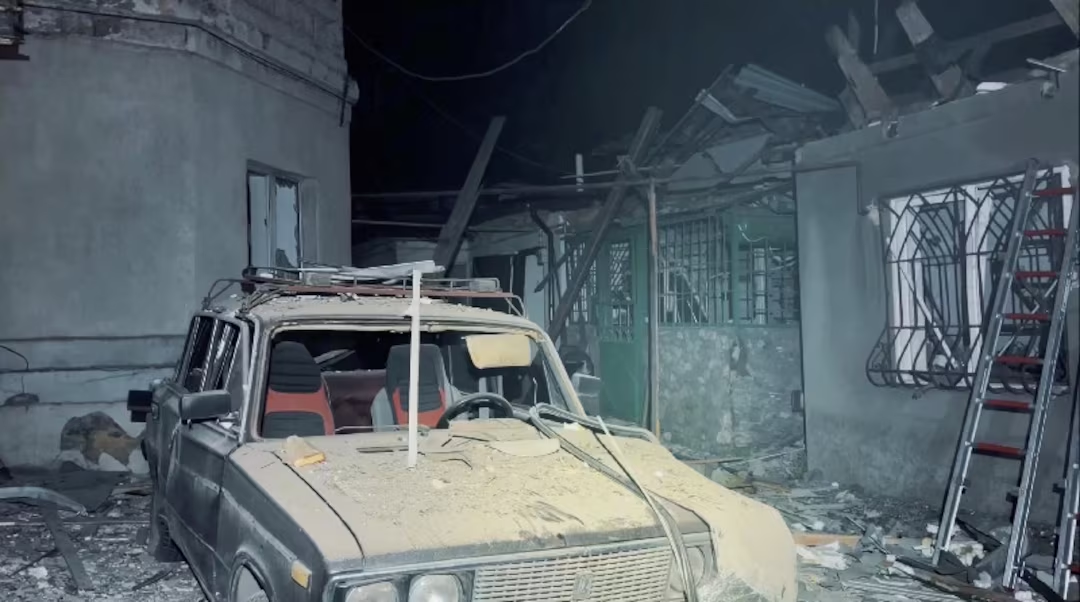
Two civilians, including an 11-year-old boy and a 59-year-old man, were injured during the strikes. Images shared by local authorities showed shattered windows, damaged vehicles, and debris scattered across streets.
Odesa remains a key strategic city because of its Black Sea location and export infrastructure. Since the beginning of the conflict, the region has frequently faced missile and drone attacks aimed at disrupting trade and transportation routes.
Key Damage Reported in Odesa
- Residential buildings damaged
- School facility struck
- Kindergarten affected
- Civilian vehicles destroyed
- Multiple injuries confirmed
The repeated targeting of civilian infrastructure continues to raise international concern about the humanitarian impact of the war.
Dnipro Missile Strike Injures Children and Civilians
In southeastern Ukraine, the city of Dnipro also came under heavy attack. Regional officials confirmed that Russian missiles injured at least 18 people during the overnight strikes.
Among the injured were two children:
- A two-year-old girl
- A ten-year-old boy
Medical teams treated victims for blast injuries, cuts, and trauma caused by shattered glass and collapsing structures.
Oleksandr Hanzha, the regional governor, said emergency responders worked through the early morning hours to clear debris and support affected families.
Dnipro has become an important logistics and defense hub during the war. Due to its strategic role, the city continues to face repeated missile attacks from Russian forces.
Residents described hearing multiple explosions during the night as air defense systems attempted to intercept incoming threats.
Zaporizhzhia and Kherson Also Targeted
The southeastern region of Zaporizhzhia reported additional casualties following overnight shelling and drone attacks. Officials confirmed that at least three people suffered injuries.
Meanwhile, in the southern Kherson region, one person was killed and nine others were injured after Russian strikes hit populated areas.
Regional governor Oleksandr Prokudin stated that rescue workers and medical teams were deployed immediately after the attacks.
Kherson has remained one of the most dangerous frontline regions due to its proximity to active combat zones and frequent artillery exchanges.
Civilian Impact of the Overnight Strikes
The latest attacks caused:
- Loss of civilian life
- Injuries to children
- Damage to schools and homes
- Psychological trauma for residents
- Disruption to local services
International humanitarian groups have repeatedly warned about the long-term consequences of continued strikes on populated communities.
Read: IRAN MARITIME BLOCKADE: United States shuts down Iran sea trade
Russia Reports Ukrainian Drone Attacks
Russian authorities also reported overnight drone activity targeting regions inside Russia. According to the Interfax news agency, drones were intercepted over areas including Rostov and Belgorod.
Russia’s defense ministry claimed that air defense systems successfully shot down several Ukrainian drones before they could reach major targets.
The exchange of drone attacks between both countries has intensified significantly over the past year. Military analysts say drones are increasingly being used because they can strike long distances while avoiding some traditional defense systems.
Over the weekend, Ukrainian drone attacks reportedly caused fatalities in Russia’s Moscow region. Officials there said at least four people died during one of the largest drone assaults on the Russian capital in more than a year.
Both Moscow and Kyiv continue to deny intentionally targeting civilians.
Why Odesa and Dnipro Remain Strategic Targets
Military experts believe Russia continues to focus on cities like Odesa and Dnipro because of their strategic importance.
Odesa’s Importance
- Major Black Sea export hub
- Critical grain shipping route
- Important naval position
- Key transportation center
Dnipro’s Importance
- Major logistics hub
- Industrial center
- Military supply route
- Population concentration
Control and disruption of these locations can influence military operations, economic activity, and civilian morale.
Humanitarian Concerns Continue to Grow
The overnight attacks once again highlighted the growing humanitarian crisis caused by the ongoing conflict.
Thousands of Ukrainian civilians continue to live under constant threat of airstrikes and shelling. Families in heavily targeted areas often spend nights in shelters or underground stations to avoid injuries.
Humanitarian organizations have called for:
- Greater civilian protection
- Expanded emergency aid
- Faster reconstruction support
- Continued diplomatic efforts
Schools, hospitals, and residential buildings remain at risk in many parts of the country.
The emotional impact on children has also become a major concern. Mental health experts warn that repeated exposure to violence and air raid sirens can create lasting trauma for young residents.
International Reaction to the Latest Attacks
Global leaders and international organizations continue to monitor developments closely.
Western governments have repeatedly condemned attacks on civilian infrastructure while reaffirming military and humanitarian support for Ukraine.
At the same time, diplomatic efforts aimed at reducing tensions have struggled to produce lasting results.
Several analysts believe the increase in drone warfare signals a new phase in the conflict, where long-range attacks could become even more frequent.
International observers also warn that escalating strikes on both sides may increase regional instability and further complicate peace negotiations.
How Drone Warfare Is Changing the Conflict
Drone technology has transformed modern warfare in Ukraine. Both Russia and Ukraine now rely heavily on unmanned aerial systems for surveillance and attacks.
Advantages of Drone Warfare
- Lower operational costs
- Long-range strike capability
- Faster deployment
- Difficult detection in some conditions
Risks Associated With Drone Attacks
- Civilian casualties
- Damage to infrastructure
- Increased fear among populations
- Escalation of retaliatory attacks
Experts say drone warfare allows both sides to maintain pressure even when traditional ground offensives slow down.
Residents Describe Fear and Uncertainty
Residents in affected areas described another sleepless night marked by explosions and emergency sirens.
Many families rushed to shelters after hearing incoming drones and missiles. Some residents reported seeing flashes in the sky as Ukrainian air defense systems attempted interceptions.
In Odesa, local volunteers helped clear debris from damaged buildings while emergency workers searched for survivors.
Community support networks have become essential in many regions, providing food, shelter, and medical assistance after attacks.
Despite ongoing dangers, many Ukrainians continue daily life under difficult conditions, balancing work, school, and safety concerns.
Economic Impact of Continued Attacks
The ongoing conflict continues to place enormous pressure on Ukraine’s economy.
Repeated attacks on infrastructure can affect:
- Transportation systems
- Energy networks
- Export operations
- Local businesses
- Housing development
Odesa’s role as a major export center makes attacks there especially significant for trade and shipping activity.
Economic experts warn that rebuilding damaged infrastructure will require billions of dollars and years of investment.
At the same time, uncertainty caused by the conflict continues to affect global energy and food markets.
What Happens Next in the Conflict?
Military analysts expect both sides to continue drone and missile operations in the near future.
Several factors could shape the next phase of the war:
- International military support
- Air defense capabilities
- Economic pressures
- Diplomatic negotiations
- Battlefield developments
The coming months may determine whether the conflict moves toward escalation or renewed diplomatic efforts.
FAQ Section
1. What happened in Ukraine overnight?
Russian forces launched drones, missiles, and shelling attacks across several Ukrainian regions, killing one person and injuring more than 30 civilians.
2. Which Ukrainian cities were attacked?
The attacks targeted Odesa, Dnipro, Zaporizhzhia, and Kherson.
3. Were children injured in the attacks?
Yes. Officials confirmed that several children, including a two-year-old girl and a ten-year-old boy, were injured.
4. Did Russia report attacks as well?
Russian authorities stated that Ukrainian drones were intercepted over regions including Rostov and Belgorod.
5. Why are drone attacks increasing?
Military experts believe drones are increasingly used because they offer long-range strike capabilities at lower operational costs.

