
Table of Contents
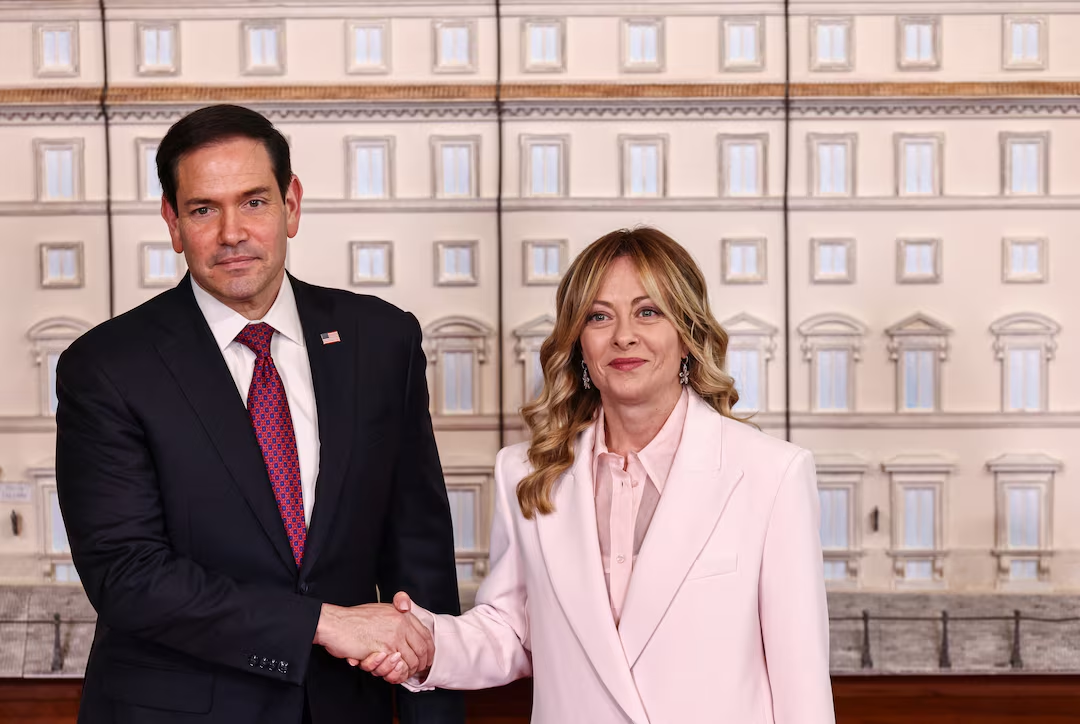
Meloni meets Rubio in Rome during a period of rising diplomatic tension between Italy and the United States, with the ongoing Iran war creating new political and strategic disagreements between the longtime allies.
Italian Prime Minister Giorgia Meloni welcomed U.S. Secretary of State Marco Rubio for high-level discussions focused on the Middle East conflict, relations with the Vatican, trade tensions, and broader security cooperation.
The visit comes at a difficult moment for the Italian government. Meloni, once considered one of U.S. President Donald Trump’s strongest allies in Europe, now faces increasing domestic pressure over Italy’s relationship with Washington and its position on the Iran conflict.
Read: Trump press dinner attack suspect update security concerns
Why Meloni Meets Rubio at a Critical Political Moment
The talks between Meloni and Rubio come as the Iran war continues reshaping international alliances.
For months, Meloni attempted to balance:
- Strong ties with Washington
- European Union expectations
- Italian public opinion
- Economic concerns linked to the conflict
That balancing act has become increasingly difficult.
Italy has publicly resisted deeper involvement in the U.S.-Israeli military campaign against Iran, creating visible disagreements with Washington.
At the same time, the economic impact of the war, especially rising energy prices and market instability, has increased pressure on European governments.
Read: Trump press dinner attack suspect update security concerns
Rubio Seeks to Ease Tensions With Rome
Rubio’s visit to Rome is viewed as an effort to stabilize relations between the two countries.
Before meeting Meloni, Rubio held discussions with Italian Foreign Minister Antonio Tajani.
Tajani described the discussions as positive and emphasized the importance of cooperation between Europe and America.
According to Tajani:
- Europe still needs strong U.S. cooperation
- Italy values its alliance with Washington
- The United States also benefits from European partnerships
Diplomatic observers believe Rubio’s visit aims to prevent disagreements over Iran from creating deeper fractures within Western alliances.
The Iran War Has Strained Italy-US Relations
The war involving Iran has become one of the biggest sources of tension between Rome and Washington.
Italy has refused to fully support some American military operations connected to the conflict.
One major disagreement involved the Sigonella air base in Sicily.
Italian officials reportedly blocked the use of the military facility for U.S. combat operations linked to the Iran war because Washington allegedly failed to seek prior approval.
That decision angered American officials and exposed divisions between the allies.
The disagreement highlighted Italy’s cautious approach toward deeper military involvement in the Middle East crisis.
Meloni Faces Political Pressure at Home
Meloni’s close relationship with Trump has become increasingly controversial inside Italy.
Although the Italian prime minister previously benefited politically from her connection with conservative movements in the United States, the Iran war has complicated that strategy.
Italian voters remain deeply concerned about:
- Rising fuel prices
- Economic instability
- Risks of military escalation
- Nuclear conflict fears
- European security concerns
Pollsters suggest that growing public dissatisfaction with the war could hurt Meloni ahead of national elections expected next year.
Opposition parties have accused her government of failing to clearly distance itself from U.S. foreign policy decisions.
Trump’s Attacks on Pope Leo Created New Tensions
Another sensitive issue discussed during Rubio’s trip involves tensions surrounding the Vatican.
Trump recently faced criticism after making controversial comments targeting Pope Leo.
Those remarks triggered backlash across Italy, where the Catholic Church remains highly influential.
Meloni publicly described the attacks on the pope as “unacceptable.”
Her criticism reportedly angered Trump, who later accused the Italian leader of lacking courage and failing to support Washington.
Political analysts say the dispute created one of the most serious public disagreements between Trump and Meloni since their alliance began.
Vatican Relations Matter Deeply in Italy
Relations with the Vatican remain politically important for any Italian government.
Italy is overwhelmingly Catholic, and statements involving the pope often generate strong public reactions.
Rubio’s meetings at the Vatican are therefore being closely monitored by Italian officials.
Rome reportedly wants reassurance that tensions between Washington and the Holy See will not escalate further.
Diplomatic experts believe Rubio’s visit partly aims to calm concerns inside both the Vatican and the Italian government.
Trump Threatened US Troop Withdrawal From Italy
One of the most controversial developments involved Trump’s reported threat to withdraw U.S. troops from Italy.
Although no official withdrawal plan has been announced, the remarks caused concern among defense officials and political leaders.
Italy hosts several important American military facilities that play major roles in NATO operations and Mediterranean security.
Meloni acknowledged that decisions regarding U.S. troop deployments ultimately depend on Washington.
However, she also stated that Italy would not support such a move.
Security experts warn that major changes to the U.S. military presence in Italy could affect NATO coordination across Europe and the Mediterranean region.
Defense Officials Warn About Nuclear Escalation
Italian Defense Minister Guido Crosetto has also expressed concern about the direction of the Iran war.
Crosetto warned that escalating tensions could threaten U.S. global leadership and create risks of nuclear confrontation.
He described the situation as potentially dangerous and urged caution from all parties involved.
Those remarks reflect growing anxiety across Europe regarding the possibility of wider military escalation.
Several European governments fear that prolonged conflict with Iran could destabilize global security and economic systems.
Economic Impact of the Iran War on Italy
The ongoing Middle East conflict has created significant economic concerns for Italy.
Key issues include:
Rising Energy Prices
Oil market instability has increased fuel costs across Europe.
Trade Uncertainty
Shipping disruptions in the Gulf region continue affecting global commerce.
Inflation Pressures
Higher transportation and energy costs contribute to broader inflation concerns.
Tourism Risks
Regional instability sometimes affects international travel confidence.
Italy’s economy remains vulnerable to external energy shocks because the country depends heavily on imported energy supplies.
Meloni Tries to Balance Europe and America
Meloni has attempted to position herself as a bridge between Europe and the United States.
Her government supports NATO cooperation and strong Western alliances, but Italy also wants to maintain strategic independence on certain international issues.
This balancing strategy has become more difficult because of:
- The Iran war
- European disagreements with Trump
- Domestic political pressure
- Economic concerns
- Public opposition to military escalation
Read: Trump press dinner attack suspect update security concerns
Rubio and Meloni Discuss Other Global Issues
The meeting between Meloni and Rubio extended beyond the Iran conflict.
Officials also discussed:
Russia-Ukraine War
Both countries continue supporting Ukraine, although differences remain regarding long-term strategy.
US Tariffs on European Goods
Trade disputes between Washington and European allies remain unresolved.
Cuba Policy
The United States continues seeking stronger diplomatic and economic pressure on Cuba.
Gulf Security
Regional stability in the Middle East remains a shared concern.
These discussions highlight the broad scope of Italy-US cooperation despite recent disagreements.
Public Opinion in Italy Is Shifting
Public opinion polls suggest many Italians are becoming more skeptical of close alignment with Washington during the Iran conflict.
Several factors influence public attitudes:
- Fear of wider war
- Economic hardship
- Concerns about military involvement
- Support for diplomatic solutions
- Opposition to nuclear escalation
Political experts say Meloni must carefully manage these domestic concerns while preserving Italy’s international alliances.
Europe Watches Italy-US Relations Closely
Other European governments are closely monitoring the relationship between Rome and Washington.
Italy plays a major role within:
- The European Union
- NATO
- Mediterranean security cooperation
- Global diplomatic discussions
Any serious breakdown in Italy-US relations could affect broader Western unity.
European leaders remain concerned about divisions emerging within transatlantic alliances during a period of global instability.
Can Italy and the US Repair Tensions?
Despite recent disagreements, both countries continue emphasizing the importance of cooperation.
Several factors still support strong relations:
Shared NATO Membership
Italy and the United States remain key NATO allies.
Economic Partnerships
The two countries maintain strong trade and investment ties.
Security Cooperation
Military coordination continues across multiple international operations.
Diplomatic Interests
Both governments still support broader Western strategic goals.
Analysts believe neither side wants a long-term diplomatic rupture.
The Iran Conflict Remains the Biggest Challenge
The future of Italy-US relations may largely depend on how the Iran war develops.
Several scenarios remain possible:
Diplomatic Settlement
Negotiations reduce tensions and stabilize relations.
Continued Limited Conflict
Disagreements persist but remain manageable.
Wider Regional Escalation
Growing military confrontation deepens political divisions.
European governments continue urging diplomacy to avoid broader conflict.
How the Vatican Could Influence Diplomacy
The Vatican may also play an indirect diplomatic role.
Popes historically advocate peace, dialogue, and conflict prevention.
Because of the Catholic Church’s global influence, Vatican reactions can shape international political discussions.
Rubio’s engagement with Vatican officials may therefore carry both symbolic and diplomatic importance.
Italy, which maintains close ties with the Holy See, remains highly sensitive to tensions involving the pope.
Political Risks Ahead for Meloni
Meloni faces several political risks as elections approach.
Challenges include:
- Managing relations with Trump
- Addressing voter concerns over inflation
- Avoiding deeper military involvement
- Preserving European alliances
- Responding to criticism from opposition parties

