
Table of Contents
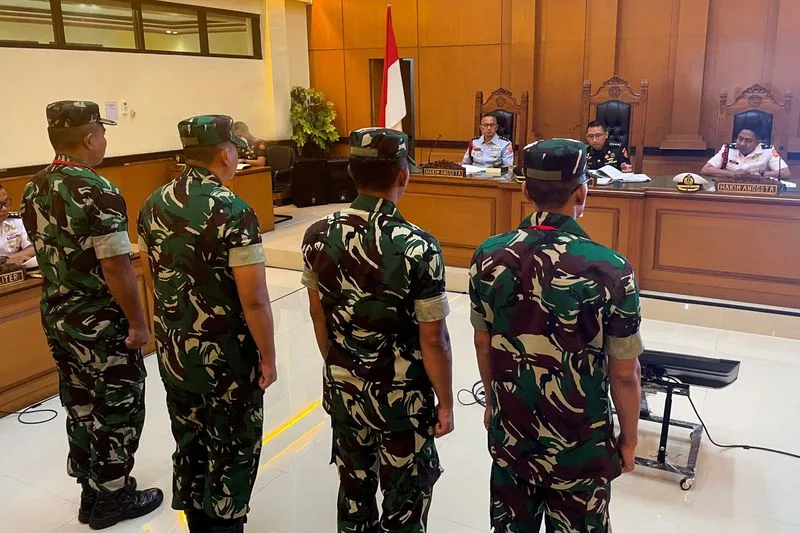
The Indonesia military court trial has officially started in Jakarta, where four military intelligence officers are facing charges over an acid attack on human rights activist Andrie Yunus. The case has drawn national and international attention because it touches on freedom of speech, military accountability, and democratic rights in Indonesia.
Prosecutors say the suspects targeted Yunus after he criticized the growing influence of the armed forces in civilian government. If convicted, the accused officers could each face up to 12 years in prison.
This trial is seen as a major test for Indonesia’s justice system and its willingness to hold security personnel accountable.
Read:US Negotiators to Islamabad as Iran Rejects Direct Talks
What Happened to Andrie Yunus?
Andrie Yunus, deputy coordinator of KontraS, a respected Indonesian rights organization, was attacked on March 12 in Jakarta.
According to investigators:
- Two assailants on a motorcycle approached him.
- Acid was thrown at his face and body.
- He suffered burns across 20% of his body.
- His right eye was badly damaged.
- He has been left permanently scarred.
Why Was He Allegedly Targeted?
During the Indonesia military court trial, prosecutors stated the officers felt insulted by Yunus’ activism.
He had publicly opposed legal reforms that made it easier for military officers to hold civilian government positions.
Authorities claim the suspects believed Yunus had:
- Disrespected the military institution
- Damaged its reputation
- Crossed political boundaries through criticism
That alleged motive has raised serious concerns among democracy advocates, who argue criticism of public institutions must be protected.
Who Are the Officers on Trial?
The four men standing trial reportedly served in Indonesia’s military intelligence unit. Their ranks range from captain to second sergeant.
They have been charged under Indonesia’s criminal code with:
- Premeditated serious assault
- Coordinated attack causing permanent injury
- Use of corrosive substances as weapons
If found guilty, they face a maximum prison sentence of 12 years.
Reuters reported all four were present in court during the opening hearing.
Indonesia Military Court Trial Sparks Accountability Debate
One of the biggest controversies is not only the attack itself, but where the case is being heard.
Instead of a civilian criminal court, the proceedings are taking place in a military court.
Critics argue this could create:
- Reduced public oversight
- More lenient punishment
- Limited transparency
- Institutional protection for officers
Human rights watchdog Komnas HAM said the use of a military court may weaken public confidence in the process.
Rights Group Says More People Were Involved
Komnas HAM, Indonesia’s national human rights commission, said at least 14 individuals may have been connected to the planning or execution of the attack.
That means ten others have not yet faced charges. The commission urged police to continue investigations and pursue anyone involved, regardless of military status. This has added pressure on authorities to widen the case beyond the four officers currently on trial.
Why This Case Matters for Indonesia
The Indonesia military court trial is larger than one criminal case. It reflects broader concerns about the role of the military in a democratic society. Indonesia is the world’s third-largest democracy, but critics say military influence has expanded in recent years.
Under President Prabowo Subianto, a retired general, observers note stronger military involvement in:
- Civilian ministries
- State-owned companies
- National policy discussions
- Regional governance roles
Many analysts say Yunus became a symbol of resistance to that shift.
Free Speech Under Pressure
Shortly before the attack, Yunus had recorded a podcast discussing the military’s growing powers. That detail has increased fears among journalists, academics, and activists. If critics can be violently targeted, some warn it may discourage open debate.
Komnas HAM stated the assault could create fear among civilians who wish to criticize officials. That warning is significant because healthy democracies depend on open disagreement.
Read:US Negotiators to Islamabad as Iran Rejects Direct Talks
Government Response
President Prabowo previously described the attack as an act of terrorism and promised a thorough investigation.
That statement raised hopes the government would pursue accountability.
Now, attention turns to whether the trial will match those promises.
Observers will be watching for:
- Independent judges
- Fair evidence review
- Equal treatment under law
- Serious sentencing if guilt is proven
- Further arrests if warranted
Public Reaction in Indonesia
Citizens across Indonesia have followed the case closely.
Common public reactions include:
Support for Yunus
Many Indonesians admire his courage and human rights advocacy.
Calls for transparency
People want the trial open and fair.
Concern over military power
Some fear criticism of state institutions is becoming riskier.
Demand for reform
Legal experts are again calling for military personnel accused of crimes against civilians to be tried in civilian courts.
Can This Trial Restore Trust?
The Indonesia military court trial may become a defining moment.
If justice is transparent and complete, it could strengthen confidence in Indonesia’s institutions. If the process appears weak or selective, it may deepen public distrust.
Several factors will shape public judgment:
| Issue | Why It Matters |
|---|---|
| Open hearings | Shows transparency |
| Independent rulings | Builds credibility |
| Full investigations | Ensures fairness |
| Equal punishment | Prevents privilege |
| Victim support | Demonstrates justice |
What Happens Next?
The trial is expected to continue with:
- Witness testimony
- Medical evidence on injuries
- Security and communications records
- Statements from defendants
- Final verdict and sentencing decision
Legal analysts expect strong domestic and international attention throughout the process.
Expert View: A Test of Democratic Strength
From an EEAT perspective, cases like this are measured by institutions, not speeches.
A functioning democracy requires:
- Rule of law
- Civilian rights
- Independent courts
- Accountability for officials
- Protection for dissent
Indonesia has made democratic progress over decades. This case now tests how durable that progress remains.
FAQ Section
1. What is the Indonesia military court trial about?
It concerns four military officers accused of carrying out an acid attack on activist Andrie Yunus.
2. Who is Andrie Yunus?
He is a deputy coordinator at KontraS, an Indonesian human rights organization.
3. What injuries did Yunus suffer?
He suffered burns to 20% of his body and serious damage to one eye.
4. Why is the trial controversial?
Because it is being handled in a military court rather than a civilian court.
5. What sentence could the accused face?
They face up to 12 years in prison if convicted.

