
Table of Contents
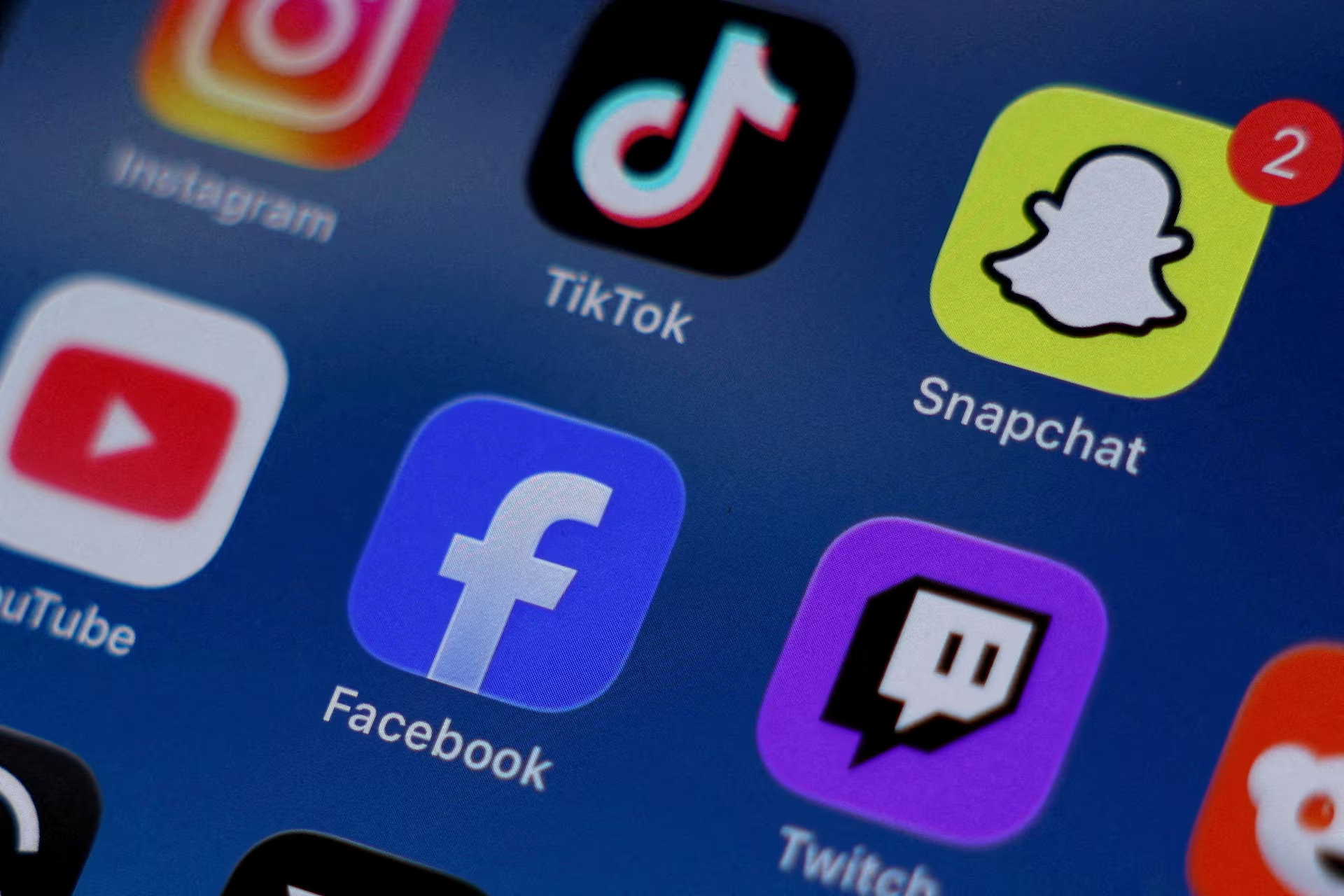
The children’s social media ban debate has become one of the biggest global technology and parenting issues of 2026. From Australia to Europe and the United States, governments are introducing stricter laws to limit minors’ access to platforms like Meta Platforms Facebook, Instagram, TikTok, Snapchat, and YouTube.
Officials argue that unlimited access to social media exposes children to cyberbullying, addiction, harmful content, mental health problems, online predators, and manipulative algorithms. Technology companies, however, warn that strict regulations may raise privacy concerns and limit digital freedom.
Australia became the first country to pass a nationwide ban for users under 16. Since then, several nations have started drafting similar policies. Europe is preparing broader regulations, while lawmakers in the United States continue debating child safety laws.
Read: Emily Blunt Devil Wears Prada 2 Box Office $233M Opening
Why Countries Are Introducing a Children’s Social Media Ban
Many policymakers believe social media companies failed to protect younger users. Studies from mental health experts, educators, and child safety organizations show that excessive social media use can negatively affect children in several ways.
Main Concerns Behind the New Laws
- Rising anxiety and depression among teenagers
- Cyberbullying and online harassment
- Exposure to violent or sexual content
- Addictive algorithms designed to increase screen time
- Reduced academic performance
- Sleep disruption caused by excessive device use
- Privacy risks and data collection practices
- Dangerous online trends and challenges
Governments increasingly argue that children are not emotionally prepared to manage these risks without stronger protections.
Australia Leads the Global Push
Australia made headlines in December 2025 after introducing one of the toughest online safety laws in the world. The legislation requires major social media companies to prevent users under 16 from accessing their platforms.
Key Features of Australia’s Law
- Applies to TikTok, Instagram, Facebook, YouTube, Snapchat, and similar platforms
- Companies face penalties up to A$49.5 million for violations
- Platforms must improve age verification systems
- Enforcement officially began on December 10, 2025
Australian officials said the law aims to reduce online harm and improve children’s mental health.
Supporters praised the move as a historic step for child protection. Critics, however, questioned whether age verification systems can work effectively without invading user privacy.
Europe Expands Online Child Safety Regulations
European governments are rapidly moving toward stricter online rules for minors. Several countries are proposing bans or tighter parental consent requirements.
France Moves Toward a National Restriction
France approved legislation to ban social media access for children under 15. Lawmakers cited concerns about online bullying and psychological harm.
The bill still requires Senate approval before becoming law, but it reflects growing pressure across Europe for stronger digital safeguards.
Denmark Plans Tougher Restrictions
Denmark announced plans to prohibit social media use for children under 15. Parents may still authorize limited access for children aged 13 and above.
Officials believe parental involvement is essential in regulating online behavior.
Greece Nears Official Announcement
Greek authorities are reportedly preparing a nationwide restriction for children under 15. The government sees online addiction as a growing public health concern.
Slovenia Drafts New Legislation
Slovenia is also developing laws aimed at preventing younger children from accessing social media platforms without supervision.
Spain Pushes for Stricter Age Verification
Spain plans to require stronger identity and age checks for online platforms. Prime Minister Pedro Sanchez stated that protecting children online has become a national priority.
Norway Raises Digital Consent Age
Norway proposed increasing the digital consent age from 13 to 15. Parents would still have the option to approve accounts for younger users.
European Union Targets Harmful Platform Design
The European Union is preparing broader legislation focused on addictive social media features.
European Commission President Ursula von der Leyen Ursula von der Leyen recently announced plans to address harmful design practices through the upcoming Digital Fairness Act.
Proposed EU Measures Include
- Stricter age verification systems
- Limits on addictive algorithms
- Better parental controls
- Greater transparency from tech companies
- Restrictions on AI-driven engagement tools
The European Parliament has also discussed setting a minimum social media age of 16 across the EU.
If approved, the new rules could significantly reshape how platforms operate in Europe.
China’s Strict Digital Controls
China already has some of the world’s most aggressive internet restrictions for minors.
The country introduced a “minor mode” system that automatically limits screen time based on a child’s age. Platforms and devices must comply with government guidelines.
China’s System Includes
- Daily screen time restrictions
- Curfews for online activity
- Mandatory child-focused settings
- Educational content prioritization
Chinese authorities argue that digital discipline is necessary for healthy childhood development.
India Considers Tougher Online Rules
India has joined the global debate over children’s internet safety.
Government advisers recently described social media platforms as “predatory” due to their engagement-focused algorithms. Officials in Goa are also exploring restrictions similar to Australia’s model.
India’s massive youth population makes the issue particularly important for policymakers.
Experts believe future regulations could include:
- Mandatory parental consent
- Stronger age verification
- Screen time limitations
- Enhanced child privacy protections
United States Faces Growing Pressure
The United States has not introduced a nationwide social media ban for minors, but lawmakers continue pushing for stronger protections.
Senator Ted Cruz Ted Cruz recently backed the Kids Online Safety Act, which would require companies to exercise reasonable care when designing features that affect children.
Key Goals of the Kids Online Safety Act
- Reduce harmful algorithmic recommendations
- Improve parental supervision tools
- Increase transparency from platforms
- Protect minors from online exploitation
Several U.S. states have already passed laws requiring parental consent for younger users. However, many of these laws face legal challenges over free speech concerns.
Read: Emily Blunt Devil Wears Prada 2 Box Office $233M Opening
Social Media Companies Respond to Global Pressure
Major technology companies insist they already provide safety protections for minors.
Platforms including TikTok, Instagram, Snapchat, and Facebook officially require users to be at least 13 years old. Critics argue these rules are easy to bypass because children can simply enter false birth dates.
Industry Concerns About New Restrictions
Technology companies warn that strict bans could create several problems:
- Privacy concerns linked to identity verification
- Reduced freedom of expression
- Difficulty enforcing global standards
- Risk of excluding vulnerable children from support networks
Some companies are now investing heavily in AI-based age verification systems to satisfy regulators.
The Mental Health Debate Continues
Mental health remains the central issue behind the global children’s social media ban movement.
Researchers continue studying the relationship between excessive social media use and emotional well-being among teenagers.
Reported Psychological Effects
- Anxiety disorders
- Depression symptoms
- Low self-esteem
- Social comparison pressure
- Sleep deprivation
- Reduced attention span
Many child psychologists argue that younger users are especially vulnerable because their brains are still developing.
At the same time, some experts caution against blaming social media alone for broader mental health problems.
Challenges Governments Still Face
Although governments are moving quickly, implementing these laws remains difficult.
Major Obstacles
1. Age Verification Technology
Many systems cannot accurately verify a user’s age without collecting sensitive personal information.
2. Privacy Concerns
Critics worry stricter identity checks could expose children and families to data security risks.
3. Enforcement Difficulties
Children may still access platforms through VPNs, fake accounts, or shared devices.
4. Balancing Rights and Safety
Governments must balance child protection with freedom of expression and internet access rights.
5. Global Regulation Differences
Different laws across countries may create confusion for multinational technology companies.
Parents Play a Critical Role
Experts consistently emphasize that laws alone cannot fully protect children online.
Parents remain essential in guiding digital behavior and teaching internet safety.
Recommended Parenting Strategies
- Set screen time limits
- Monitor online activity respectfully
- Encourage offline hobbies
- Discuss cyberbullying openly
- Use parental control tools
- Teach responsible social media habits
Strong communication between parents and children is often considered more effective than strict punishment alone.
Schools and Educators Join the Conversation
Educational institutions are also responding to concerns about social media addiction.
Some schools have introduced:
- Smartphone-free classrooms
- Digital literacy lessons
- Mental health awareness programs
- Cyberbullying prevention workshops
Teachers increasingly report that excessive phone use affects concentration, classroom participation, and academic performance.
The Future of Children’s Social Media Access
The next few years may completely transform how young people use digital platforms.
Governments worldwide appear determined to hold technology companies more accountable for child safety. Stronger age restrictions, AI moderation systems, and parental controls are likely to become standard features across social media networks.
Future developments could include:
- Universal digital ID verification
- AI-powered child safety monitoring
- Region-specific youth versions of apps
- Stricter advertising limits for minors
- Expanded mental health protections
Read: OFFICIAL: Wu Yize World Snooker Championship Win and Emotional Tribute
What This Means for Families and Tech Companies
Parents want stronger protections. Regulators want accountability. Tech companies want workable rules that preserve user privacy and business growth.
Finding the right balance will remain one of the biggest digital policy challenges of this decade.
One thing is already clear: governments across the world no longer view children’s unrestricted social media access as acceptable. The era of minimal regulation is ending, and stricter online child protection laws are becoming the global norm.
Key Takeaways
- Australia introduced the world’s toughest social media restrictions for children under 16
- Several European countries are preparing similar bans
- The European Union plans broader online safety legislation
- The United States continues debating child protection laws
- Mental health concerns are driving global action
- Tech companies face increasing pressure to improve child safety systems
FAQ Section
What is the children’s social media ban?
The children’s social media ban refers to government laws restricting minors from accessing platforms like TikTok, Instagram, Facebook, and Snapchat.
Which country first banned social media for children under 16?
Australia became the first country to pass a nationwide law banning social media access for users under 16.
Why are governments restricting children’s social media use?
Governments cite concerns about mental health, cyberbullying, online addiction, harmful content, and data privacy risks.
What age limits are countries proposing?
Most countries are considering minimum ages between 13 and 16 for social media access.
Can parents still allow social media use?
Some countries may allow parental consent exceptions for younger users depending on local laws.

