
Table of Contents
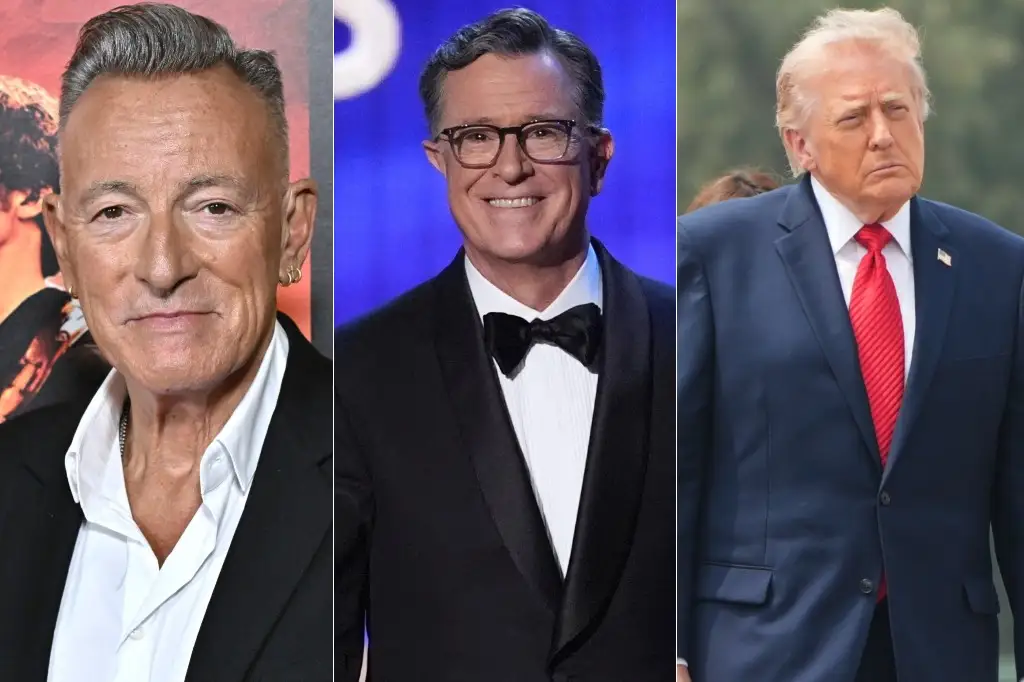
The Bruce Springsteen Colbert cancellation controversy gained national attention after Bruce Springsteen criticized the cancellation of The Late Show with Stephen Colbert while taking aim at U.S. President Donald Trump during a televised appearance.
Springsteen appeared on The Late Show on Wednesday ahead of the program’s final episode and used part of his performance introduction to defend host Stephen Colbert.
The rock legend claimed Colbert lost his show because Trump “can’t take a joke,” triggering another chapter in the long-running public feud between Springsteen and Trump.
The comments quickly sparked reactions from political commentators, entertainment figures, and White House representatives.
Read: Jessi Draper Apology to Miranda Hope After Chase McWhorter Kiss Scandal Shocks Fans
Bruce Springsteen Supports Stephen Colbert During Final Episodes
During his appearance on The Late Show, Springsteen openly expressed support for Colbert as the late-night host prepared for the series finale.
The singer told the audience he believed Colbert became the first major television host to lose a program because of political pressure connected to comedy criticism.
Springsteen’s comments immediately generated widespread discussion online.
Fans of both Springsteen and Colbert praised the singer for publicly defending the comedian during the show’s final week.
Others criticized the remarks as unnecessarily political.
Springsteen Performs Anti-ICE Protest Song
As part of his appearance, Springsteen performed “Streets of Minneapolis,” a protest song released earlier in the year.
The track addressed controversial immigration enforcement issues and referenced the deaths of Renee Nicole Good and Alex Pretti, who were reportedly killed during an ICE-related incident in Minneapolis.
Before beginning the performance, Springsteen used the opportunity to address Colbert’s cancellation directly.
His speech framed the issue as part of a broader debate over freedom of expression and political criticism in American media.
Trump and Springsteen Continue Longstanding Feud
The Bruce Springsteen Colbert cancellation comments added another layer to the highly publicized feud between Springsteen and Trump.
The conflict between the two public figures has continued for several years, particularly during election periods and political rallies.
Springsteen has repeatedly criticized Trump publicly during concerts and interviews.
Trump, meanwhile, has responded aggressively through speeches and social media posts.
The latest controversy once again placed entertainment and politics at the center of national debate.
White House Responds to Springsteen’s Comments
After Springsteen’s appearance aired, White House spokesman Davis Ingle responded with sharp criticism directed at Colbert.
According to reports, Ingle described Colbert as untalented and blamed poor ratings for the cancellation of The Late Show.
The White House also referenced previous social media comments made by Trump criticizing Springsteen personally.
Trump previously described the singer as “boring” and encouraged supporters to boycott his concerts.
The public exchange highlighted the increasingly blurred line between entertainment, politics, and media battles in the United States.
Why Stephen Colbert Became a Political Target
Stephen Colbert built much of his late-night television identity around political satire.
Over the years, The Late Show regularly featured jokes and commentary aimed at major political figures, including Trump.
Supporters viewed Colbert’s comedy as an important form of political commentary.
Critics argued the show became too politically focused.
The cancellation of The Late Show therefore quickly became part of larger national conversations involving:
- Media freedom
- Political influence
- Entertainment industry pressure
- Corporate decision-making
- Freedom of expression
Bruce Springsteen’s History of Political Activism
Springsteen has long been outspoken about political and social issues.
Throughout his career, he frequently addressed topics involving:
- Economic inequality
- Workers’ rights
- Immigration
- Democracy
- Social justice
His concerts often include speeches discussing American politics and national identity.
Many fans admire his willingness to speak openly about controversial subjects.
Others believe entertainers should avoid political commentary entirely.
Trump’s Previous Criticism of Springsteen
The current controversy follows several earlier clashes between Trump and Springsteen.
Last year, Springsteen described Trump’s administration during a concert in England as “corrupt, incompetent and treasonous.”
Trump responded by attacking the singer personally on social media.
The president accused Springsteen of suffering from “Trump Derangement Syndrome” and criticized both his music and appearance.
The repeated exchanges have transformed their disagreement into one of the most visible celebrity-political feuds in recent years.
Jimmy Kimmel Shows Support for Colbert
The entertainment industry also reacted to Colbert’s departure.
Jimmy Kimmel announced that his program, Jimmy Kimmel Live!, would not air against Colbert’s final episode.
Kimmel said the decision was made out of respect for Colbert and the Late Show staff.
He praised the professionalism and kindness of Colbert’s production team and noted that modern late-night television no longer feels like the intense rivalry-driven environment of earlier decades.
The gesture was widely interpreted as a sign of solidarity among late-night hosts.
Read: Jessi Draper Apology to Miranda Hope After Chase McWhorter Kiss Scandal Shocks Fans
Political Comedy Remains Divisive in America
The Bruce Springsteen Colbert cancellation debate also reflects the growing polarization surrounding political comedy in the United States.
Late-night television programs increasingly focus on political topics, especially during election periods.
Supporters argue satire helps hold powerful leaders accountable.
Critics claim many shows push partisan viewpoints instead of balanced entertainment.
The debate surrounding Colbert’s cancellation therefore extends beyond one television program.
It touches broader questions involving:
- The role of comedians in politics
- Corporate media decisions
- Audience polarization
- Political influence in entertainment
- Public trust in media
Why Late-Night Television Still Matters
Despite changes in media consumption, late-night television continues influencing public conversation.
Programs like The Late Show often shape discussions around politics, celebrity culture, and social issues.
Hosts such as Colbert, Kimmel, and others remain major cultural voices with large digital audiences through streaming clips and social media.
The end of a long-running show therefore represents a significant moment in American entertainment.
Bruce Springsteen’s Comments Generate Mixed Reactions
Public reaction to Springsteen’s comments was divided.
Supporters Said:
- He defended free speech
- He stood by a fellow entertainer
- Political satire remains important
- Artists should speak openly
Critics Said:
- Celebrities should avoid politics
- Colbert’s ratings caused the cancellation
- The remarks were unnecessarily divisive
- Entertainment should remain neutral
The debate continued trending across online platforms following the broadcast.
The Role of Corporate Media Decisions
Another major topic emerging from the controversy involves corporate influence over television programming.
Springsteen specifically referenced media executives during his comments.
Many analysts believe financial pressures and changing viewing habits continue reshaping late-night television.
Streaming platforms, digital content, and declining traditional television audiences have affected several entertainment programs in recent years.
Some observers argue Colbert’s cancellation may reflect broader industry changes rather than political interference.
Entertainment and Politics Continue to Overlap
The relationship between politics and entertainment has become increasingly interconnected.
Celebrities frequently engage in political activism while politicians regularly use entertainment platforms to communicate with voters.
This overlap creates situations where television cancellations, concerts, and celebrity interviews become political flashpoints.
The Bruce Springsteen Colbert cancellation discussion is another example of how entertainment controversies can quickly evolve into national political debates.
Social Media Amplifies Celebrity Feuds
Social media platforms played a major role in spreading reactions to Springsteen’s appearance.
Clips from The Late Show quickly circulated online, generating millions of views and thousands of comments.
Political supporters from both sides used the moment to defend their positions.
Entertainment controversies now often develop into larger online battles because viral clips allow moments from television broadcasts to spread instantly worldwide.
Key Moments From the Bruce Springsteen Colbert Cancellation Controversy
Springsteen’s Statement
Claimed Colbert lost his show because Trump “can’t take a joke.”
White House Reaction
Officials dismissed Colbert’s popularity and criticized Springsteen.
Jimmy Kimmel’s Response
Paused his own show in solidarity with Colbert’s final episode.
Trump’s Previous Comments
Trump previously attacked Springsteen publicly over political criticism.
Industry Debate
The controversy renewed discussions about media freedom and political satire.
Why Fans Continue Supporting Stephen Colbert
Stephen Colbert remains one of the most recognized late-night hosts in America.
Many viewers appreciate his combination of political commentary and comedy.
Supporters argue his show became an important platform for discussing major national issues.
Even critics acknowledge his influence on modern late-night television.
The final episode of The Late Show is expected to attract significant attention from longtime viewers and entertainment audiences.
What Happens Next for Springsteen and Colbert?
Springsteen continues touring and performing while remaining politically active.
Colbert’s future plans after The Late Show remain closely watched within the entertainment industry.
Media analysts expect both figures to remain influential public voices moving forward.
The broader debate involving entertainment, politics, and media freedom is also unlikely to disappear anytime soon.
FAQ Section
Why did Bruce Springsteen defend Stephen Colbert?
Springsteen said he believed Colbert’s show was cancelled because of political pressure connected to Donald Trump.
What did Springsteen say about Donald Trump?
Springsteen claimed Trump “can’t take a joke” and criticized political pressure surrounding late-night comedy.
How did the White House respond?
White House spokesman Davis Ingle criticized Colbert and defended the cancellation as a ratings-related decision.
Why is The Late Show ending?
CBS has not officially linked the cancellation to politics, though debate continues regarding ratings, media strategy, and political influence.
Did Jimmy Kimmel react to Colbert’s cancellation?
Yes. Jimmy Kimmel announced his show would pause during Colbert’s final episode out of respect and support.

