
Table of Contents
Quick Summary
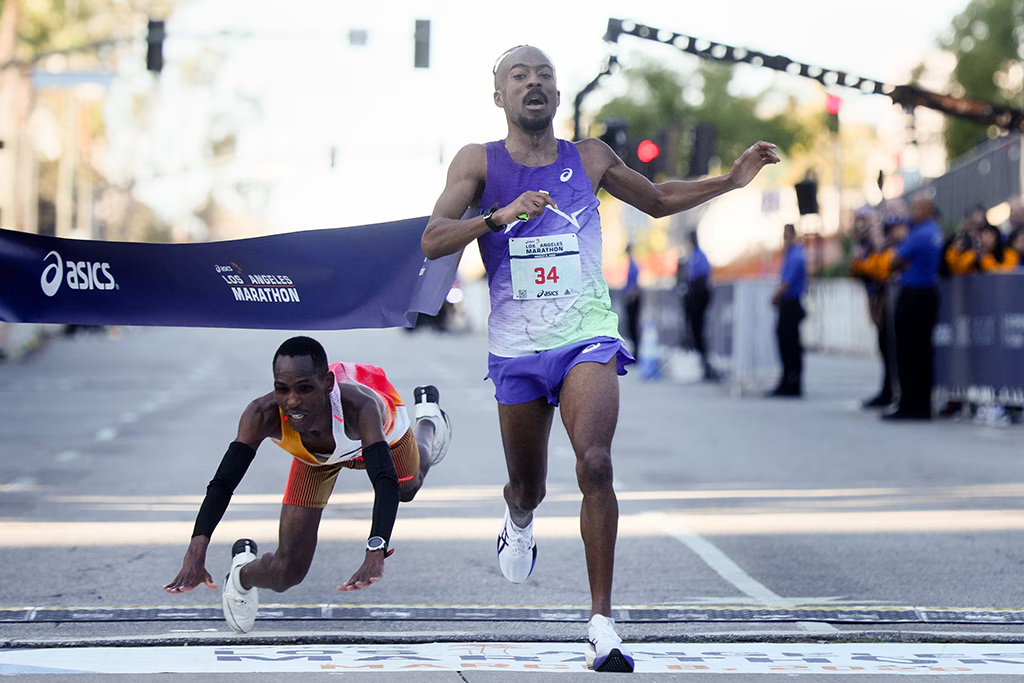
The 2026 edition of the Los Angeles Marathon delivered a dramatic ending as American runner Nathan Martin overtook Kenya’s Michael Kimani Kamau in the final seconds to secure victory by 0.01 seconds.
Following the race, organizers clarified that the event’s lead vehicles were not responsible for Kamau’s brief wrong turn near the finish line.
Background
The Significance of the Los Angeles Marathon 2026 Finish
The Los Angeles Marathon is widely recognized as one of the major road races in the United States. Each year, thousands of runners gather in Los Angeles to compete in a course that stretches across the city and attracts elite athletes from multiple continents.
The 2026 race quickly became one of the most talked-about editions due to the unusual sequence of events that unfolded in the final moments. For most of the competition, Kenyan athlete Michael Kimani Kamau held a comfortable lead, setting the pace ahead of the rest of the professional field.

Spectators expected a routine finish as the runners approached the final stretch. However, a brief moment of confusion just meters before the finish line changed the outcome of the race. That moment allowed Nathan Martin to close the gap and take advantage of the opportunity.
The final result produced one of the closest marathon finishes in recent years, drawing attention from fans and analysts across the running community.
Details
Race Results from the Los Angeles Marathon 2026 Finish
Official timing records from the Los Angeles Marathon show an incredibly narrow margin separating the top two runners.
• First Place: Nathan Martin – 2:11:16.50
• Second Place: Michael Kimani Kamau – 2:11:16.94
• Third Place: Enyew Nigat
The difference between first and second place measured only 0.01 seconds, creating a photo finish that immediately sparked conversations among spectators and online audiences.
In the women’s race, Kenyan athlete Priscah Cherono secured first position on the Women’s Pro Podium.
The Moment That Changed the Race
As the runners approached the final stretch of the race in Los Angeles, Kamau briefly drifted off the designated route. Video footage later showed him running slightly away from the finishing direction before quickly correcting himself.
During those crucial seconds, Martin accelerated toward the finish line. The American runner had already begun increasing his pace during the last kilometer, sensing a chance to close the distance between himself and the race leader.
The brief hesitation allowed Martin to surge forward, and the two runners crossed the finish line almost simultaneously.
Response from Marathon Officials
After the race, organizers from the Los Angeles Marathon addressed speculation circulating online.
A statement explained that the race’s lead vehicles exited the course according to a pre-planned route and did not make any incorrect turns during the event.
Officials also confirmed:
• No formal protest had been submitted by Kamau or his team
• The official race results remain unchanged
• Event organizers will evaluate crowd interactions near the finish line
The statement also acknowledged that spectators standing close to the race route may sometimes distract runners during critical moments.
Analysis
Why the Los Angeles Marathon 2026 Finish Stands Out
Marathon races test endurance, pacing, and mental focus over a distance of 42.195 kilometers. Despite covering such a long route, outcomes can still be decided within fractions of a second.
Several factors contributed to the significance of the 2026 finish:
Elite Competition Level
Both Martin and Kamau maintained impressive pace throughout the race. Their finishing times demonstrate how closely matched elite marathon runners can be during major events.
Situational Awareness
Running at high speed while navigating a course requires complete focus. Even experienced athletes may encounter confusion when approaching crowded sections of a race.
Final-Stretch Strategy
Martin’s ability to increase his pace during the final kilometer proved decisive. His willingness to push harder despite trailing allowed him to capitalize on the opportunity that emerged.
Nathan Martin’s Reaction
After securing first place, Nathan Martin admitted he initially believed catching the leader would be extremely difficult.
During an interview after the race, Martin explained that he only began to believe victory was possible once he saw the lead vehicle ahead and noticed the distance shrinking between himself and Kamau.
With less than a kilometer remaining, he decided to push for one final effort. That aggressive strategy ultimately produced the winning result.
What Next
Possible Changes After the Los Angeles Marathon 2026 Finish
Organizers of the Los Angeles Marathon are expected to review several operational details following the dramatic conclusion of the race.
Future adjustments may include:
• Improved barriers guiding runners toward the finish line
• Additional volunteers directing athletes during the final meters
• Stronger crowd management near the finish chute
These steps could help reduce potential distractions and ensure athletes maintain a clear path to the finish.
Both Martin and Kamau are likely to compete in additional international marathon events later in the season, where fans will watch closely to see how their rivalry develops.
The finish of the Los Angeles Marathon demonstrated how unpredictable marathon racing can be, even after more than two hours of intense competition. A brief moment of confusion, combined with a powerful late surge, produced a result separated by only hundredths of a second.
For spectators and the global running community, the race provided a memorable reminder of how quickly fortunes can change in elite athletics.

