
Table of Contents
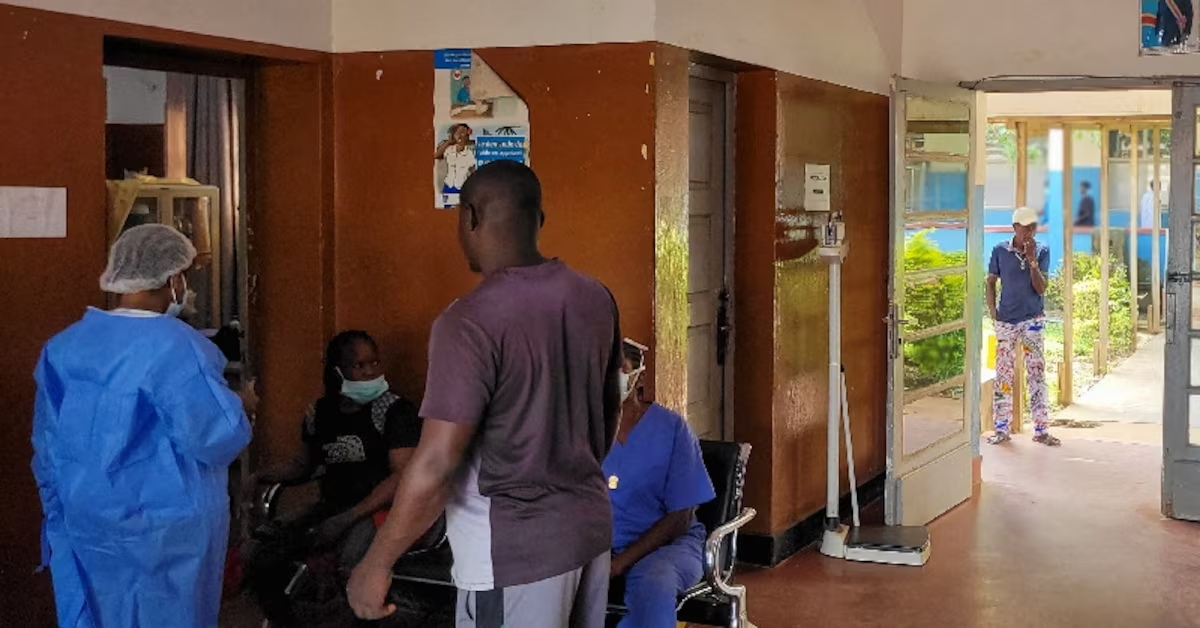
The World Health Organization has officially declared the latest Ebola outbreak in the Democratic Republic of Congo and Uganda a public health emergency of international concern. The decision comes as health authorities struggle to contain the rapid spread of the Bundibugyo virus strain, a rare form of Ebola that currently has no approved vaccine or targeted treatment.
The declaration places the international community on high alert and signals growing fears that the outbreak could spread further across borders if urgent action is not taken. According to the WHO, the outbreak does not yet meet the definition of a global pandemic. However, the risk level for neighbouring African countries has significantly increased.
Health officials confirmed dozens of deaths and hundreds of suspected infections across multiple regions, prompting emergency responses from governments, hospitals and humanitarian organizations.
The outbreak is already affecting major cities, including Kampala in Uganda and Kinshasa in the Democratic Republic of Congo, increasing concerns over urban transmission and international travel-related cases.
Read: Nigeria airlines debt relief Tinubu fuel price talks: Official policy update and aviation impact
Understanding the Ebola Outbreak Emergency
What Is the Bundibugyo Virus?
The current outbreak is linked to the Bundibugyo strain of Ebola virus disease. Unlike the more common Ebola-Zaire strain, the Bundibugyo variant has fewer available medical countermeasures.
Important facts about the Bundibugyo strain include:
- No approved vaccine currently exists
- No strain-specific treatment has been approved
- It can spread rapidly through human contact
- Symptoms can become severe quickly
Health experts describe the situation as extraordinary because previous outbreaks often benefited from vaccines and experimental therapies that are unavailable for this strain.
Where the Outbreak Started
The outbreak began in the Ituri province of eastern Democratic Republic of Congo.
Affected health zones reportedly include:
- Bunia
- Rwampara
- Mongbwalu
The Democratic Republic of Congo has experienced multiple Ebola outbreaks over the decades due partly to its dense tropical forests, which serve as natural reservoirs for the virus.
Latest Ebola Statistics Raise Global Concern
Confirmed and Suspected Cases
According to the World Health Organization, the outbreak has already resulted in alarming numbers.
Current figures include:
- 80 suspected deaths
- 8 laboratory-confirmed cases
- 246 suspected cases
Officials warn the true number could be much higher because:
- Many rural areas lack testing access
- Initial samples show high positivity rates
- More suspected cases continue emerging daily
International Spread Already Recorded
One of the most concerning developments is the confirmation of cross-border transmission.
The WHO confirmed:
- Cases linked to travel from Congo to Uganda
- One confirmed case in Kinshasa
- Two confirmed cases in Kampala
- At least one reported death in Uganda
The spread into major urban centers increases fears of wider regional transmission if containment efforts fail.
Why WHO Declared an International Emergency
Public Health Emergency of International Concern Explained
A Public Health Emergency of International Concern is one of the WHO’s highest alert levels.
The declaration allows:
- Faster international coordination
- Emergency funding access
- Cross-border surveillance improvements
- Global health resource mobilization
The WHO uses this classification only for serious health events with international implications.
Why This Outbreak Is Considered Dangerous
Several factors contributed to the emergency declaration.
Lack of Approved Treatments
Unlike other Ebola strains, no approved therapy exists specifically for Bundibugyo virus disease.
Cross-Border Spread
The virus has already moved between countries through infected travelers.
Weak Health Infrastructure
Many affected regions face healthcare shortages, including:
- Limited hospitals
- Inadequate medical supplies
- Staff shortages
- Poor laboratory capacity
Risk of Urban Transmission
Cases reaching major cities raise the danger of faster human-to-human spread.
Read: Nigeria airlines debt relief Tinubu fuel price talks: Official policy update and aviation impact
Symptoms and Transmission of Ebola Virus Disease
Common Ebola Symptoms
Ebola virus disease can begin suddenly and worsen rapidly.
Common symptoms include:
- Fever
- Severe headache
- Muscle pain
- Vomiting
- Diarrhea
- Fatigue
- Internal bleeding in severe cases
The illness can become fatal if patients do not receive immediate medical care.
How Ebola Spreads
The virus spreads through direct contact with bodily fluids from infected individuals.
Transmission may occur through:
- Blood
- Vomit
- Sweat
- Saliva
- Contaminated surfaces
- Contact with infected bodies after death
Healthcare workers and family caregivers often face the highest risk during outbreaks.
WHO Recommendations for Countries
No Border Closures Advised
Despite the growing emergency, the WHO strongly advised countries against shutting borders or restricting trade.
Health experts warn that border closures may:
- Encourage illegal crossings
- Reduce official health monitoring
- Complicate humanitarian support
- Damage regional economies
Instead, the WHO recommends enhanced health surveillance.
Immediate Measures Recommended
Countries have been urged to implement:
- Cross-border screening
- Daily monitoring of contacts
- Isolation of confirmed cases
- Emergency response activation
- Public awareness campaigns
Authorities are also encouraging rapid reporting of symptoms to reduce delayed diagnoses.
Uganda and Congo Intensify Emergency Response
Hospitals Under Pressure
Hospitals in both countries are preparing for additional cases.
Key challenges include:
- Overcrowded health centers
- Limited protective equipment
- Fear among healthcare workers
- Difficulty tracing contacts
Emergency medical teams are being deployed to affected communities to strengthen containment efforts.
Community Education Campaigns Begin
Public awareness campaigns now focus on:
- Recognizing symptoms early
- Avoiding physical contact with infected persons
- Reporting suspected cases quickly
- Preventing misinformation
Health experts believe community trust will play a major role in controlling the outbreak.
Economic and Social Impact of the Ebola Outbreak Emergency
Fear of Regional Economic Disruption
Past Ebola outbreaks caused severe economic damage across Africa.
Possible consequences include:
- Reduced tourism
- Business slowdowns
- Disrupted trade routes
- Healthcare spending increases
Communities already facing poverty may experience even greater hardship if the outbreak expands.
Schools and Public Gatherings at Risk
Authorities may also consider restrictions on:
- Large public gatherings
- Schools
- Religious events
- Community ceremonies
Such measures could affect millions of residents if infection rates continue rising.
Global Health Agencies Increase Monitoring
International Support Growing
Global health organizations are increasing support for the region.
Agencies involved include:
- World Health Organization
- Africa CDC
- United Nations health programs
- Humanitarian aid groups
Medical experts are also exploring whether experimental therapies may offer temporary support.
Lessons From Previous Ebola Outbreaks
The Democratic Republic of Congo has faced several Ebola outbreaks since the virus was first identified in 1976.
Past outbreaks taught important lessons:
- Early detection saves lives
- Public cooperation matters
- Contact tracing is critical
- Misinformation can worsen outbreaks
Health authorities are attempting to apply those lessons quickly to avoid another major humanitarian crisis.
Why the Ebola Emergency Matters Globally
International Travel Risks
Modern travel means outbreaks can spread internationally faster than ever before.
The WHO is particularly concerned about:
- Unmonitored border crossings
- International air travel
- Delayed symptom reporting
- Overwhelmed healthcare systems
Countries worldwide are now reviewing preparedness plans in case imported cases emerge.
Healthcare Systems Remain Vulnerable
Many nations remain cautious following recent global health crises.
Experts warn healthcare systems in some regions may struggle if outbreaks expand rapidly.
Preparedness measures now include:
- Airport screening
- Emergency response drills
- Medical supply reviews
- Surveillance coordination
Key Facts About the WHO Declares Ebola Outbreak Emergency Situation
Here are the major updates so far:
- WHO declared an international public health emergency
- The outbreak involves the Bundibugyo Ebola strain
- No approved vaccine exists for this strain
- 80 suspected deaths have been reported
- Uganda and Congo both confirmed cases
- International spread has already occurred
- WHO advises against border closures
- Cross-border health monitoring has intensified
FAQ Section
What did the WHO declare about the Ebola outbreak?
The WHO declared the Ebola outbreak in Congo and Uganda a public health emergency of international concern.
What strain of Ebola is involved?
The outbreak involves the Bundibugyo strain of Ebola virus disease.
Is there a vaccine for the Bundibugyo Ebola strain?
Currently, there is no approved vaccine specifically designed for the Bundibugyo strain.
How does Ebola spread?
Ebola spreads through direct contact with bodily fluids of infected individuals or contaminated materials.
Should countries close borders because of the outbreak?
No. The WHO advises against border closures and instead recommends health screening and monitoring measures.

