
Table of Contents
Denmark World Cup Failure: What Happened and Why It Matters
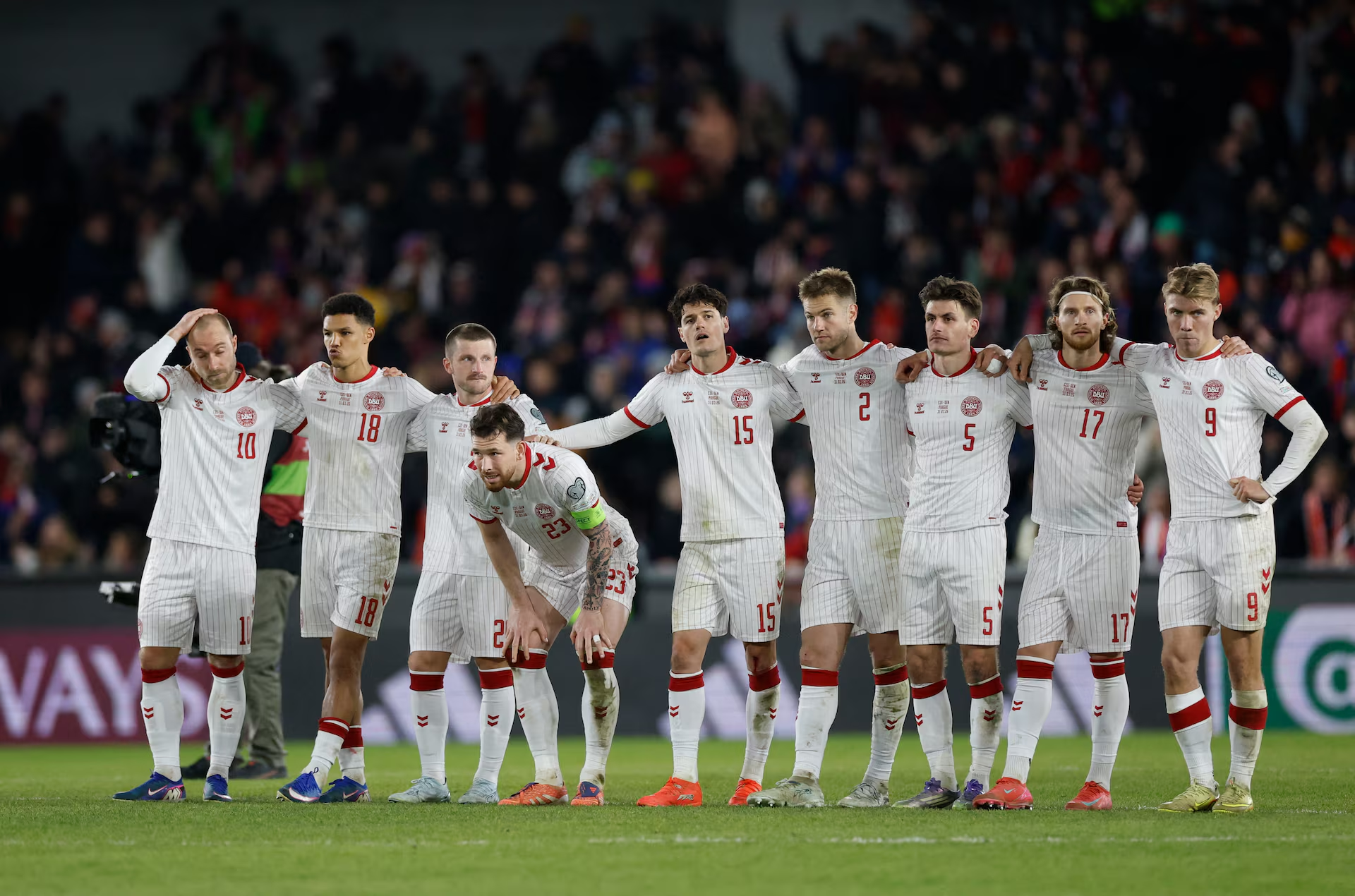
The Denmark World Cup Failure has officially marked the end of an era for Denmark national football team after their heartbreaking elimination by Czech Republic national football team in the 2026 FIFA World Cup qualifying playoffs. The defeat, confirmed after a tense penalty shootout in Prague, has triggered widespread reflection across Danish football.
A 2-2 draw in regular and extra time led to a 3-1 penalty loss, sealing Denmark’s fate and denying them a place at the global tournament. This result doesn’t just represent a missed qualification,it signals a deeper structural issue within the squad.
Why does this matter? Denmark has been a consistent presence in international tournaments for over a decade. Missing out now raises concerns about aging players, tactical direction, and leadership gaps.
Match Breakdown and Key Moments
Prague Showdown Defines Denmark World Cup Failure
The playoff final at the epet Arena saw Denmark dominate possession but fail to convert their control into decisive goals. Despite managing two goals in open play, their inefficiency in front of goal proved costly.

The Czech Republic national football team capitalized on key moments and showed composure during penalties. Denmark, on the other hand, faltered under pressure, missing crucial spot-kicks.
This result followed a troubling pattern during qualification:
- A disappointing 2-2 draw against Belarus
- A damaging 4-2 defeat to Scotland national football team
- Inconsistent attacking performances
Such outcomes collectively contributed to the Denmark World Cup Failure narrative.
Squad Analysis and Transition Phase
Aging Core and Leadership Void
One of the central themes behind the Denmark World Cup Failure is the gradual decline of its veteran core. Players who once defined the team’s identity are either retiring or losing influence.
Christian Eriksen, now 34, has long been the creative heartbeat of the team. However, his impact has diminished, and he has confirmed this was his final World Cup qualifying campaign.
Similarly, the absence of Simon Kjaer due to retirement has left a leadership gap in defense. Captain Pierre-Emile Hojbjerg has struggled to carry the responsibility alone.
The result is a team lacking:
- On-field leadership
- Tactical cohesion
- Emotional resilience in high-pressure moments
Midfield Creativity and Tactical Issues
Denmark’s midfield has particularly suffered. While Mikkel Damsgaard has shown flashes of brilliance at club level, he has not yet replicated Eriksen’s influence on the national stage.
The team often appeared disconnected:
- Midfield failed to link effectively with attack
- Forwards were isolated
- Chances were created but not converted
Coach Brian Riemer has been criticized for not establishing a system that maximizes player strengths.
Performance Data and Key Details
Statistics Behind Denmark World Cup Failure
- Average possession in playoff final: Over 60%
- Goals scored in playoff: 2
- Penalty shootout conversion: 1/4
- Age of key players:
- Eriksen: 34
- Hojbjerg: 30
- Recent tournament history:
- Euro 2020 semi-finalists
- Regular World Cup participants since 2010
Despite strong possession numbers, Denmark lacked clinical finishing, a recurring issue throughout their campaign.
Managerial Perspective
Riemer’s Position Under Scrutiny
Coach Brian Riemer has remained defiant despite mounting criticism. Having signed a contract extension until the 2028 European Championship, he insists he is the right person to lead the rebuild.
However, questions remain:
- Why was there no clear successor to Eriksen?
- Why did tactical inconsistencies persist?
- Why did the team struggle against weaker opposition?
The Denmark World Cup Failure has intensified scrutiny on his decisions and long-term vision.
Regional Context and Rival Comparisons
Scandinavian Contrast Highlights Decline
The disappointment is amplified by the success of regional rivals:
- Sweden national football team qualified
- Norway national football team qualified
Denmark now stands as the only Scandinavian nation absent from the tournament, a stark contrast to their recent dominance in the region.
My Analysis: Why This Is a Turning Point
The Denmark World Cup Failure Is More Than a Bad Result
This situation is not just about losing a playoff. It reflects deeper structural challenges.
First, the transition from a golden generation has not been managed effectively. Teams must evolve gradually, but Denmark appears caught between eras—neither fully experienced nor fully youthful.
Second, leadership erosion has clearly affected performance. Great teams rely on strong personalities, and Denmark currently lacks enough of them.
Third, tactical rigidity has limited adaptability. Modern international football demands flexibility, something Denmark has struggled to demonstrate.
That said, this moment also presents an opportunity. A rebuild, though painful, can lead to long-term success if handled correctly.
What Fans Can Expect Moving Forward
Rebuilding After Denmark World Cup Failure
The next phase for Denmark will likely include:
- Integration of younger talents
- Tactical restructuring
- Leadership development within the squad
Potential focus areas:
- Strengthening midfield creativity
- Improving attacking efficiency
- Building a new defensive core
The road to recovery will not be immediate, but it is necessary.
What Next for Denmark?
Immediate and Long-Term Steps
In the short term:
- Squad evaluation and potential retirements
- Tactical reassessment by coaching staff
- Preparation for upcoming international fixtures
In the long term:
- Building toward the 2028 European Championship
- Developing a new generation of leaders
- Establishing a clear footballing identity
There are no immediate medicals or transfers involved, but internal restructuring is inevitable.
The Denmark World Cup Failure has forced a moment of reckoning for one of Europe’s most consistent football nations. From tactical shortcomings to leadership gaps, several factors contributed to their downfall.
However, within this disappointment lies the foundation for renewal. If managed correctly, this transition could usher in a new era of Danish football.

