
Table of Contents
Quick Summary
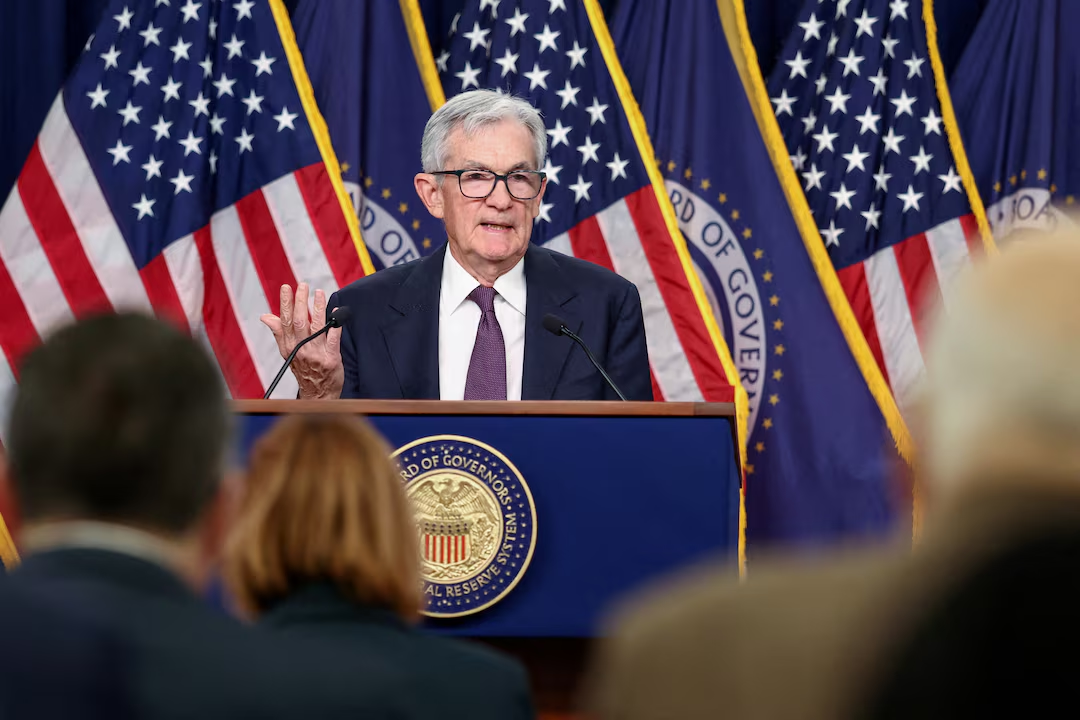
Global central banks, including those in the U.S., Europe, and Japan, have decided to keep interest rates unchanged while signaling readiness to act against rising inflation. Officials confirmed that escalating geopolitical tensions, particularly affecting energy supply, are increasing economic uncertainty.
Background
The Central Banks Inflation Response has become a defining theme in global economics as policymakers attempt to balance inflation control with economic stability. In recent years, central banks faced criticism for reacting slowly to inflation triggered by pandemic recovery and geopolitical conflicts. Those experiences now shape a more cautious and proactive stance.
Economic shocks tied to war are not new, but the current situation introduces a more complex challenge. Energy infrastructure disruptions have historically caused ripple effects across global markets, impacting everything from transportation costs to food prices. This time, central banks are determined not to repeat past mistakes.
Previously, inflation surged following global crises, forcing aggressive rate hikes that slowed economic growth. Policymakers are now attempting to avoid such drastic measures unless absolutely necessary. Their current approach reflects lessons learned from earlier missteps, emphasizing preparedness rather than reaction.

Another factor influencing this situation is the fragile nature of global growth. While some economies show resilience, others remain vulnerable. Central banks must therefore tread carefully to avoid triggering a recession while addressing inflationary pressures.
Details
Global Rate Decisions
Across major economies, central banks opted to maintain current interest rates. This coordinated pause reflects a shared concern about uncertainty rather than confidence that inflation is fully under control. Authorities are closely monitoring developments, particularly in energy markets.
The decision to hold rates steady does not indicate complacency. Instead, it signals a strategic pause. Policymakers want more clarity before making significant moves, especially given the unpredictable nature of geopolitical developments.
Energy Prices and Inflation Risk
A key driver behind the Central Banks Inflation Response is the sharp rise in energy prices. When energy costs increase, they tend to push up production and transportation expenses across industries. Businesses often pass these costs onto consumers, leading to widespread inflation.
Households also feel the impact directly. Higher fuel and utility bills reduce disposable income, which can slow consumer spending. However, if wages rise in response, inflation can become more entrenched.
Stagflation Concerns
Analysts are increasingly warning about the possibility of stagflation—a scenario combining slow economic growth with high inflation. This situation is particularly challenging for central banks because traditional tools may not effectively address both issues simultaneously.
Avoiding stagflation is a top priority. Policymakers are therefore watching for signs such as rising wage demands and persistent price increases. Any indication that inflation is becoming embedded in the economy could prompt immediate action.
Economic Forecast Adjustments
Some central banks have already revised their inflation forecasts upward. Projections suggest that inflation could remain above target levels if disruptions persist. However, alternative scenarios indicate that inflation may stabilize if the geopolitical situation improves.
These forecasts highlight the uncertainty surrounding the current economic environment. Central banks are preparing for multiple outcomes rather than relying on a single prediction.
Policy Communication
Clear communication has become a central component of the Central Banks Inflation Response. Officials are emphasizing their readiness to act, aiming to manage expectations among investors, businesses, and consumers.
By signaling vigilance, central banks hope to prevent panic while maintaining credibility. Markets often react strongly to uncertainty, so consistent messaging is essential.
Analysis
Balancing Growth and Inflation
The current approach reflects a delicate balancing act. Central banks must contain inflation without stifling economic recovery. Raising interest rates too quickly could slow investment and increase unemployment. On the other hand, delaying action risks allowing inflation to spiral.
This balancing act is further complicated by external factors beyond policymakers’ control. Geopolitical tensions, supply chain disruptions, and energy market volatility all influence inflation dynamics.
Lessons from the Past
Experience plays a significant role in shaping the Central Banks Inflation Response. Policymakers have learned that delayed action can lead to more severe consequences later. At the same time, overly aggressive measures can trigger economic downturns.
These lessons are evident in the cautious tone adopted by central banks. They are neither rushing to tighten policy nor ignoring potential risks. Instead, they are maintaining flexibility.
Market Reactions
Financial markets are closely watching central bank signals. Investors often interpret steady rates as a sign of caution rather than confidence. This perception can influence asset prices, currency values, and investment decisions.
Uncertainty tends to increase market volatility. As a result, central banks must carefully manage both policy and communication to maintain stability.
Public Expectations
Public perception also matters. If households expect prices to keep rising, they may demand higher wages or increase spending, which can further fuel inflation. Central banks aim to anchor expectations by demonstrating commitment to price stability.
Maintaining trust is therefore critical. Without it, even well-designed policies may fail to achieve their intended outcomes.
What Next
Potential Policy Shifts
Central banks are likely to adjust their policies depending on how the situation evolves. If inflation accelerates, interest rate hikes may become necessary. Conversely, if economic growth weakens significantly, policymakers might adopt supportive measures.
Monitoring Key Indicators
Several indicators will guide future decisions, including energy prices, wage growth, and consumer spending. Changes in these areas could signal whether inflation pressures are temporary or persistent.
Global Coordination
Given the interconnected nature of the global economy, coordination among central banks may become increasingly important. Collaborative efforts can help mitigate risks and stabilize markets.
Upcoming Announcements
Further updates from policymakers are expected in the coming months. These announcements will provide more clarity on the direction of monetary policy and the overall economic outlook.
The Central Banks Inflation Response underscores the challenges of navigating an uncertain economic landscape shaped by geopolitical tensions. Policymakers remain vigilant, prepared to act if necessary while striving to protect economic stability.

