
Table of Contents
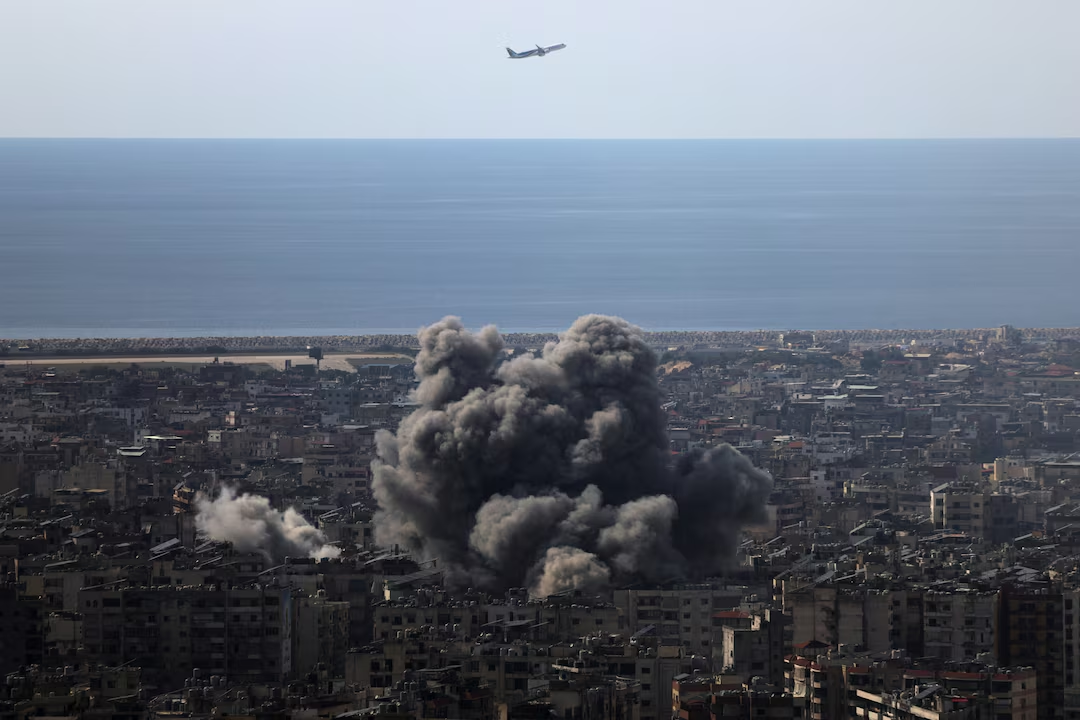
Airline Pilots War Risks have intensified as conflicts in the Middle East and other regions place commercial aircraft closer to drones, missiles, and restricted airspace.
Recent military confrontations involving the United States, Israel, and Iran have dramatically increased the number of weapons flying through the skies above critical aviation corridors. Aviation experts warn that the situation is creating unprecedented challenges for commercial pilots responsible for transporting thousands of passengers safely every day.
Industry professionals say the growing complexity of conflict zones is forcing pilots to navigate tighter routes while managing rising psychological pressure.
Quick Summary of Airline Pilots War Risks
What Happened
Airline pilots are facing increasing dangers due to missiles, drones, and expanding war zones affecting international airspace.
Aviation officials and pilots report that conflicts across the Middle East, Ukraine, and other regions have reduced safe air routes while raising operational stress.
Experts say pilots must now manage threats that were once limited mainly to military aviation environments.
Background Behind Airline Pilots War Risks
Expansion of Global Conflict Zones
The aviation industry has long depended on stable international airspace networks. Commercial airlines design routes based on safety, efficiency, and predictable geopolitical conditions.
However, recent years have seen a dramatic expansion of active conflict areas. War zones that once remained geographically limited now overlap with major flight corridors connecting Europe, Asia, and the Middle East.
Multiple conflicts have contributed to this change, including:
• The war in Ukraine
• Ongoing instability in Afghanistan
• Escalating tensions between Israel and regional groups
• U.S. and Israeli military strikes targeting Iranian interests
Because of these developments, pilots increasingly operate near environments where missiles and drones are active.
Airspace Restrictions and Flight Rerouting
Airspace closures are now far more frequent than in previous decades. Governments regularly restrict access to regions where military operations are underway.
Airlines must therefore reroute flights around these areas, often leading to longer journeys and increased fuel consumption.
Yet rerouting also compresses traffic into fewer available corridors, placing additional pressure on pilots managing crowded skies.
The Airline Pilots War Risks issue grows more complicated as more nations deploy military drones capable of traveling long distances.
Details of Airline Pilots War Risks
Drone Incursions Near Airports
Drones have emerged as one of the most disruptive threats to aviation safety.
Unlike traditional military aircraft, drones can appear suddenly and operate at altitudes that intersect with civilian flight paths.
Several European airports have experienced disruptions caused by drone sightings near runways. These incidents often force airports to temporarily suspend operations.
Pilots approaching airports must remain alert for unidentified flying objects that could threaten aircraft safety.
Aviation insiders warn that the frequency of such incidents has steadily increased.
Missile Activity in Active Conflict Zones
Ballistic missiles represent another serious concern.
Recent military exchanges in the Middle East have placed hundreds of missiles and attack drones into the skies above regions used by international airlines.
Iran’s retaliatory operations following U.S. and Israeli strikes have included attacks affecting airports in parts of the Gulf region.
These incidents forced airlines to ground numerous flights between major hubs such as Dubai and Abu Dhabi.
Although rescue flights eventually transported stranded passengers, the events highlighted how quickly airspace conditions can change during military escalation.
The Airline Pilots War Risks situation therefore involves both unpredictable weapons systems and rapidly shifting operational restrictions.
Shrinking Global Airspace
As more regions become unsafe for commercial aviation, the number of viable flight corridors continues to decrease.
Airlines must now navigate around multiple restricted zones simultaneously.
Routes connecting Europe to Asia often avoid Russian airspace due to the Ukraine conflict. Flights traveling through the Middle East must monitor security developments linked to regional tensions.
Each closure reduces the flexibility airlines once relied upon when planning international routes.
Pilots flying these routes must remain constantly updated about security conditions.
Operational Burden on Pilots
Commercial pilots undergo rigorous training to handle emergencies such as mechanical failures, severe weather, or navigation challenges.
However, they are not typically trained to deal with active military threats.
Some aviation professionals have raised concerns about the psychological toll associated with operating near potential combat situations.
Pilots must assess whether flying through certain airspace remains safe while maintaining concentration on routine flight operations.
This combination of responsibilities creates significant mental pressure.
One pilot association leader noted that commercial pilots are not military personnel and should not be expected to manage war-related risks.
Analysis of Airline Pilots War Risks
Growing Aviation Safety Concerns
The aviation industry depends heavily on predictability and safety planning. Unexpected military activity disrupts these assumptions.
Experts argue that governments must improve coordination with airlines to ensure real-time intelligence sharing regarding threats.
The Airline Pilots War Risks problem demonstrates how modern warfare increasingly intersects with civilian infrastructure.
Weapons capable of traveling hundreds of kilometers can enter airspace used by commercial aircraft without warning.
Even when missiles are not directly targeting aircraft, their presence still introduces dangerous uncertainty.
Mental Health Impact on Pilots
Another major concern involves the psychological impact on aviation crews.
Pilots already work under demanding conditions that require sustained concentration. Navigating conflict zones adds another layer of stress.
Aviation organizations have begun discussing how mental health support programs could help pilots manage these pressures.
Maintaining focus during long-haul flights becomes more challenging when crews must also consider geopolitical threats.
Experts say pilot fatigue and stress could indirectly affect aviation safety if left unaddressed.
Pressure on Airlines and Regulators
Airlines face difficult choices when deciding whether to continue flights near conflict areas.
Canceling routes can lead to financial losses and passenger disruptions. Continuing operations requires confidence that the airspace remains safe.
Regulators must balance these factors when issuing travel advisories or airspace restrictions.
International aviation organizations also play a role by providing risk assessments and safety recommendations.
The Airline Pilots War Risks challenge therefore involves cooperation among airlines, governments, and security agencies.
What Next for Airline Pilots War Risks
Potential Safety Measures
Aviation authorities may introduce additional safety protocols to address growing risks.
Possible measures include:
• Expanded intelligence sharing between governments and airlines
• Enhanced radar and surveillance systems to detect drones
• Improved pilot training for conflict zone awareness
• New international guidelines for operating near military activity
These steps could help reduce uncertainty in increasingly complex airspace environments.
Monitoring Future Conflicts
The aviation industry will closely monitor geopolitical developments that could affect flight routes.
Conflicts in the Middle East remain particularly significant due to the region’s position as a major aviation crossroads connecting continents.
If tensions continue to escalate, airlines may need to adjust routes further.
Pilots will remain at the center of these operational decisions.
Broader Impact on Global Aviation
Passenger Safety and Confidence
Passenger confidence is essential for the aviation industry. Travelers must trust that airlines operate in safe conditions.
Reports about missiles and drones near commercial flight paths naturally raise concerns among passengers.
Airlines therefore emphasize that strict safety evaluations guide every routing decision.
The Airline Pilots War Risks issue highlights how modern security threats influence public perception of air travel.
Long-Term Industry Adaptation
Aviation has historically adapted to changing global circumstances.
Technological advancements, improved communication systems, and international safety frameworks have helped maintain strong safety records.
Experts believe similar innovations may help address emerging risks associated with modern warfare and drone technology.
The industry’s ability to adapt will determine how effectively it manages these challenges in the years ahead.
The Airline Pilots War Risks situation reflects a growing intersection between global conflict and civilian aviation.
Drones, missiles, and expanding war zones are creating new challenges for pilots responsible for navigating increasingly complex airspace.
Aviation experts, regulators, and airlines continue to evaluate ways to protect crews and passengers while maintaining international connectivity.
As geopolitical tensions evolve, the aviation industry will remain vigilant in managing risks associated with modern warfare.

